We wipe the work surfaces. We disinfect the bathroom tiles. We track dust particles in furniture. We mistakenly believe that our homes are sterile zones. But you can escape this vigilance with one small plastic rectangle in each room. The whole family touches it dozens of times a day. When you stay home to beat the cold in February, indoor hygiene can become more than just an advantage. It acts as a barrier against microorganisms in winter. Forget the toilet seat. Forget about door handles. Every time you’re looking for light, a true dirt master is at your fingertips. Gently collects bacteria, sebum, dust, etc. It is an unexpected contamination vector. You need to know how to clean effectively.
Зміст
Daily attacks on Switches
Oddly enough, some objects become invisible because we use them so much. They blend into the interior until they disappear from our mind. Light switches are one of them. It also withstands continuous touch attacks. Use the switch 20-30 times a day, depending on the usage patterns of your household. This figure is related to family size and customs.
Unlike doorknobs, which are increasingly sterile, switches come into direct contact with the skin at critical moments. After working, turn it on and wash your hands. Try touching it after going to the toilet. You can turn them with oily fingers while cooking. This high-frequency manipulation turns a small plastic box into a biological junction. Everyone here has germs. Literally, they changed hands.
This is an inevitable point of contact. Capture seasonal viruses. These viruses are especially deadly in late winter. It also traps organic matter that is invisible to the naked eye. This substance becomes food for bacteria.
** The switch is not a command center. This is a high-risk road surface. **
Biofilm problems
In addition to bacterial infection, these devices also develop insidious deposits over time. We rarely notice this until it is too late. Modern switches often have a slightly grainy or matte texture. This composition provides an ideal anchor point for the stable. Your skin is constantly producing this natural oil. It sticks to the surrounding dirt like super glue.
Over months and years, this accumulation leads to the formation of a durable biofilm. The results are visible. A bright white switch may turn gray or yellowish. This is not just an aesthetic flaw. This is a serious home hygiene problem. Dirty switches can negate the benefits of hand washing. Touching a dirty button right after washing your hands is like washing your face with dirt. We need to stop thinking of switches only as electrical components. Think of it as a surface that needs special attention.
Why is this area being ignored?
Why does this critical area systematically fall through the cracks during daily cleaning?
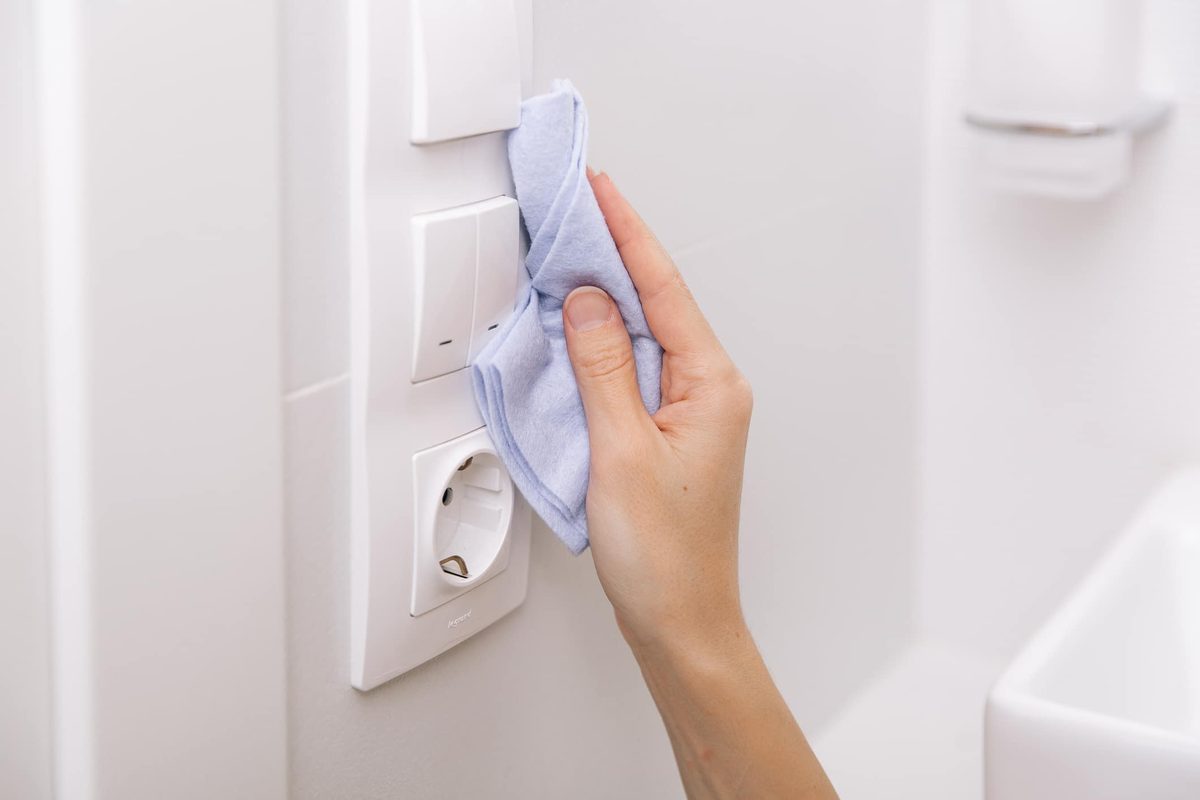
Why you need to clean your light switch (and how to do it safely)
It’s not lazy not to clean the light switch during the weekly cleaning. It’s a mixture of selective blindness and legitimate fear.
Vertical and small. It is not as noticeable as a dusty table or a dirty floor. Dirt gradually accumulates, and the brain gradually stops recognizing color changes. Then there is the element of fear. Water and electricity do not go together. This creates a strong psychological barrier. Most people use a vacuum cleaner to clean plastic. This will not remove the adhering grease. That barely scratches the surface.
But ignoring them means you’re allowing bacteria to grow in your living spaces. Every time you turn it on, you’re playing microbial roulette. The design itself is a problem. a small gap. switching mechanism button. Grease may accumulate in places that cannot be reached by the cloth. Unlike countertops, they don’t have a ritual to turn them on and off after meals. These are areas that are overlooked in standard cleaning protocols. Still, they sit very high. Children often face height problems. This increases the risk of cross-contamination in the household.
It’s time to figure out the process. Learn how to clean without worrying about shocks or damaging wires.
Safe way to remove oil with vinegar
No strong chemicals required. White vinegar works well. Natural degreaser and disinfectant. It is the indirect application that is important. Strict procedures. There are no shortcuts.
Let’s start by gathering the tools.
– Microfiber cloth (clean) to avoid scratching the plastic.
– Cotton swab for the treatment of narrow crevices.
– Spray bottle or bowl for mixing.
– Finally, wipe with a dry cloth.
Mixed solution: 50% warm water. 50% white vinegar.
Turn off the power before touching live objects. Turn the breaker for that circuit to the off position. Alternatively, remove the appropriate fuse. This is not negotiable.
Do not spray liquid directly on the switch after turning off the power. Moisture penetrating the box can cause irreparable damage. Spray on a cloth instead. Squeeze firmly. The fabric must be damp and drip-free.
Wipe the panels and buttons. Moves in small circles. Removes dirt without damaging the material.
What about the black spot in the corner? Use a cotton swab lightly moistened with the vinegar mixture. This is a precision tool.
Wipe with a dry cloth immediately after cleaning. Remove any remaining moisture. Then turn the power back on.
This simple procedure can significantly reduce the number of bacteria. Give your walls a new look. Make it a monthly routine. Let’s break the invisible chain of infection.
Next time you enter the room, stop. Look at your clutch. They’ve been waiting for this attention.