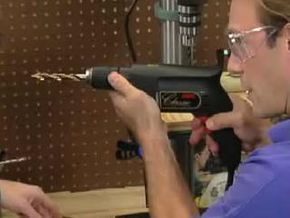
Most homeowners have a power drill sitting in a drawer. It’s probably covered in dust, alongside a handful of standard twist bits with those sharp points and spiraling flutes. If you work with wood, you know your brad points and Forstner bits. You likely have a set of driving bits for driving Phillips head screws into drywall every weekend.
Diamond drill bits? Not so much.
They are obscure to the casual handyman. They look different. They act different. And if you try to use them like a standard wood bit, you will break them. Or worse, crack your expensive granite countertop.
Зміст
What exactly is a diamond drill bit?
A diamond drill bit isn’t made of solid diamond. It’s a steel or carbide core coated with diamond powder. Those microscopic shards of diamond provide the cutting power needed to slice through materials that are harder than steel.
Think ceramic tile. Porcelain. Glass. Marble. Granite.
Standard twist bits dull instantly on these surfaces. They skate across the glaze. They heat up. They break the tile. Diamond bits grind through. They are the only option if you need to mount a towel rack over a shower wall or hang a medicine cabinet on a stone vanity.
Do diamond drill bits need water?
Yes. Most of them do.
Friction is the enemy here. Grinding hard stone creates intense heat. Without lubrication, the diamond coating burns off. The bit loses its grip. The material shatters from thermal shock.
Some diamond bits require a continuous stream of water. You drip it on the hole as you drill. Others use a coolant gel. Check the packaging. If it doesn’t say “dry drill,” assume it needs water.
Water isn’t just for cooling. It washes away the slurry of stone dust that clogs the cutting surface.
Twist bits vs. Core bits: Which one do you need?
Not all diamond bits are the same shape. The shape depends on the hole size and the material.
Twist bits look like standard drill bits but with a diamond-tipped point. These are for small holes. Typically up to 1/4 inch or so. You use these for mounting anchors in tile.
Core bits are hollow cylinders. They look like tiny pipes. They don’t drill a hole in the traditional sense. They cut a ring.
When you finish drilling with a core bit, you pull out a perfect cylinder of stone. A “plug.” The rest of the material stays intact. This is critical for plumbing. If you are installing a faucet or an overflow drain in a sink, you need a clean, large hole. A core bit gives you that.
What sizes are available?
The range is wide.
Small twist bits go down to tiny diameters used by jewelers for beads. For home renovation, you are usually looking at 3/16 inch to 1/2 inch for twist bits.
Core bits get much bigger. 1 inch, 2 inches, even larger for industrial work. The limit is usually your drill capacity and the size of your drill press or impact driver.
How to pick the right bit
Don’t just grab the first one you see. Ask two questions.
- **What am I drilling