In the United States, 292 million tons of garbage are thrown away every year. This is municipal solid waste from households, businesses and industry. Half of this (52%) ends up in a landfill. The rest is recycled or composted. Recycle glass, paper, plastic and metal. Composting deals with organic matter. But what exactly is compost?
Fertilizer made by decomposing organic matter. Create it at home. Microorganisms are used in this process. Oxygen helps break down, for example, grass, pine straw, fallen leaves, coffee grounds and food particles. As a result, a rich product called humus is created. Improve the health of your garden. It can be used as a natural soil conditioner in horticulture.
Зміст
Microbial biology
Composting is based on biology. Microorganisms feed on organic matter. They need oxygen to function. Lack of air can slow down the process and cause unpleasant odors. You can manage it at home. The end product is valuable for your garden. It provides nutrients to the soil. It doesn’t cost much to get started. Just layer your material correctly.
The goal is stable humus. This dark, brittle substance contains water. It provides nutrients to plants. The need for chemical fertilizers decreases. We turn waste into resources. This process is natural. It happens in stacks and bins. Rotate the pile to add oxygen. This maintains microbial activity. The heat generated kills the weed seeds. Decomposition is faster.
Composting at home is practical. Reduce waste sent to landfill. Save money on soil additives. You can use leftovers from the kitchen. You can use garden waste. Just avoid meat and dairy products. These attract pests. We especially use plant-based materials. The balance between green and brown is important. Green plants provide nitrogen. Brown provides carbon. Mix well. Add water if it is dry. Turn it regularly.
The finished compost looks like dark soil. Smells like forest land. It’s not bad. Ready to spread. Use it for flower beds, etc. Mix with vegetable cubes. Improves soil structure. Helps root growth. Closing the loop. Excrement becomes food for plants. The cycle continues.
You’re basically building a small ecosystem. Nature deals with decay by breaking things down into their basic components. You can recreate this in your backyard or balcony. The goal is to create the perfect environment for microbes to do their work without taking years.
It starts with three things. organic waste. water. oxygen.
If you miss any of them, the process will stop.
Trash biology
Microorganisms work here. They release energy by eating carbonaceous materials. We especially use aerobic decomposition. This just goes to show the science that they need oxygen to survive and reproduce. You provide oxygen. They consume oxygen.
The final product is humus. It is rich in plant nutrients and rich in organic nutrients such as nitrogen, phosphorus and potassium. This is what plants really want.
But microorganisms are sensitive. They need water to survive. The pile needs heat to work fast. It releases heat as it digests waste products. Temperatures in a properly managed compost pile can reach 100 to 150 degrees Fahrenheit (38 to 66 degrees Celsius). This heat kills weed seeds and pathogens. It also speeds up the decomposition considerably.
Without turning, it can last for months. If you do this, you’ll have a perfect compost pile within a few weeks.
Equilibrium conditions
Efficiency requires balance. You can’t just throw things together and hope for the best. There are four variables that need to be managed proactively.
- Enough air : Microorganisms die without oxygen. Turn the pile every 4-7 days. Do this more often at first to start the heating phase.
- Lots of water : Think of a wrung-out sponge. It should be moist and not dripping. Spray once a week. If it is too dry, the microorganisms cannot feed. If it gets too wet, oxygen is cut off and it becomes anaerobic.
- Carbon and nitrogen ratio : The goal is about 30 parts carbon and 1 part nitrogen. This is often referred to as the “brown to green” ratio. Too much nitrogen causes an ammonia smell. Too much carbon can slow down the process.
- Accessories : Size matters. Shredded leaves decompose faster than whole branches. Shred the kitchen scraps. Break up all the lumps. The smaller the particles, the more surface area the microorganisms have to attack.
Why bother composting?
The obvious reason is to reduce waste. You can keep solid waste out of municipal compost piles. This is good for the environment. It is a long-term process, but it can also lead to tax savings.
The real reason is fertilizer. Chemical fertilizers are convenient. It can also negatively affect soil biology and cause runoff problems. Compost improves the structure of the soil. It can hold water. Provides nutrients to the soil microbiome. It is a closed loop system.
The compost food web is complex. Bacteria and fungi are the most important decomposers. They are eaten by single-celled organisms such as protozoa and nematodes. They eat bacteria and fungi. There are also large invertebrates that eat smaller creatures such as stink bugs, centipedes and beetles.
This hierarchical structure keeps the population under control. Increase efficiency. It ensures that nothing goes to waste.
Composting
Start with a base layer of rough material. Small branches and corn stalks help with drainage and ventilation at the base. Add “greens” (nitrogen-rich kitchen scraps, fresh grass clippings) and “browns” (carbon-rich dry leaves, shredded paper, cardboard).
Mix them together. The goal is a 30:1 ratio. If you don’t have a scale, use a volume ratio. For every bucket of green material, add two or three buckets of brown trash. It’s easier to add brown material later than to fix sticky, smelly piles.
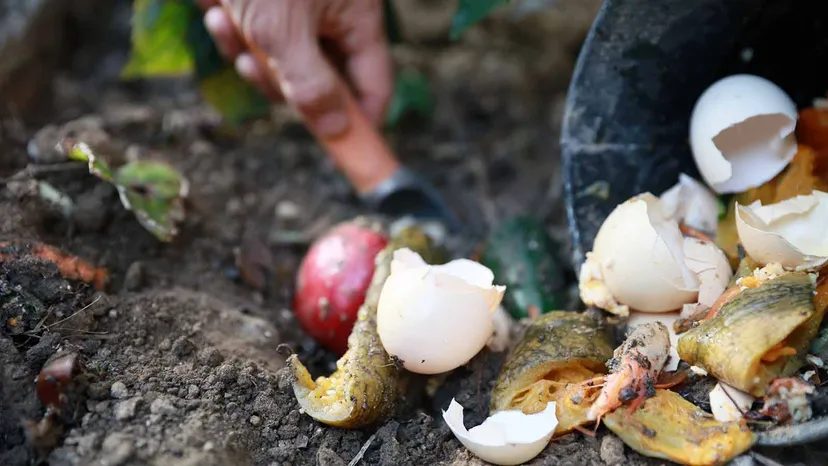
Find the right place for your compost bin
The location you choose determines everything. If you do it wrong, you could end up with bad smells, pests, and nuisance neighbors. Things will fall into place by themselves if you handle them right.
Check your local regulations first. Some HOAs and municipalities have strict rules about where deposits of organic material are allowed. If you ignore these, you could be fined or ordered to stop before the first turning is complete.
You need a place where accessibility and seclusion are balanced. It cannot be in direct conflict with bystanders. You want to keep it out of your home so the smell doesn’t spread to your living room or laundry. But if you put it behind your house, it won’t be convenient. No one wants to walk 50 meters through the snow to throw a banana peel. Aim for something in between. Close enough to use weekly and close enough to be polite.
Let’s think about the wind. You want to place a pile downwind of the main living area. Even a healthy, balanced compost pile can smell of ammonia or sulfur if it’s too hot or dry. You don’t want it floating in your window. However, be careful about its location. Too much wind can dry out the pile and blow the material away. You end up spending more time raking than composting.
Sunlight plays a difficult role here. In winter, they need direct sunlight to maintain heat and activity. The sun’s heat complements the action of microbes and keeps the rate of decomposition high. But what about summer? Direct sunlight dries out the moisture in the middle. When this happens, the microorganisms die and spoilage stops. Large trees are an ideal compromise. Create shade when the sun is strong and let light in when the sun is weak.
Drainage is not negotiable. The water collects around the bin and eventually forms silt. The smell of sludge. It attracts flies. What a mess. Choose a place where water does not accumulate. Bare ground is the best surface. Drain off excess water and allow insects and other soil organisms to move in and out of the pile. Concrete seals everything. Cleaning is hard and getting started is even harder when you need help right from the start.
Give yourself space to work. I’m talking about gaps in every direction. You must be able to turn the pile with a pitchfork or shovel without hitting a wall or fence. Space is needed to add new materials without changing the process. It may seem like a huge asset, but it will save you a lot of frustration later. If the pile is small, the margins are narrow. When you turn the pile in July, you’ll be glad you didn’t have to stuff it in a corner.
>“ If you stack it next to a large deciduous tree, it will provide cool shade in summer and sunlight in winter.
This is not just for convenience. It’s all about chemistry. Temperature, humidity and ventilation are the three basic pillars of composting. Site selection sets benchmarks for these three areas. Once you’ve made your choice, all that’s left is maintenance. If you make the wrong choice, you will be fighting a losing battle with nature and your own laziness.
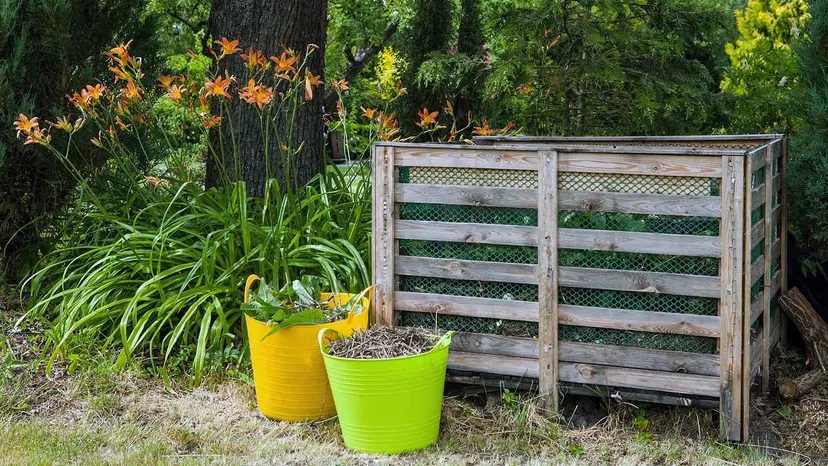
Select a structure
Can be stacked. Let nature do the heavy lifting. This is passive composting. It’s very slow. This is ineffective.
Or you can do it yourself. Active composting means daily management of your compost. you turn it. you control it. You’ll get better results faster.
If you want to make something permanent, wood, concrete blocks or steel mesh are suitable. One tank is the simplest installation. Throw another piece on top of it. Turn the pile over often. Scrape the finished compost from the bottom.
Want more control? A 3-bin system is established.
- Container 1: Fresh waste.
- Second bin: an intermediate stage. The material has been unloaded, but it is not yet ready.
- Bin 3: Ready compost.
Cover the top. When it rains, there is too much moisture. The wind blew away the light objects. Both throw you off balance.
You don’t need to build anything. Buy a compost bin. It has a handle. Air out the pile by rotating it. Or try the vermicompost bin. Stacked bottles let the worms do their work. They eat debris and create nutritious castings.
Check your location. Many cities offer residents cheap or free compost bins.
Your choice depends on your budget and effort. Also check local regulations. In some areas, open composting is prohibited or requires special protection systems.
Rubbish
Your cutting board is a treasure trove. Shred the skins, peels, seeds and leaves of fruits and vegetables. This is a “green material”. They provide moisture and nitrogen for microorganisms.
- Eggshells (crushed)
- coffee grounds
-paper filter - Corn on the cob (chopped first)
- a nutshell
・Tea bag (remove staples if any) - Used napkins
Garden waste
Get a bucket. Pick up trash while you work. This is the “brown” layer. Browns provide carbon. These provide process structure and air pockets.
・Cut grass (suitable amount)
– dried leaves
– Pine needles
– twigs and branches
– straw or hay
– sawdust
– fireplace ash
⚠️ Warning: Weeds
Technically, weeds decompose. However, compost piles are rarely hot enough to kill weed seeds. Adding weed compost to your garden will attract unwanted weeds. Jump over the weeds.
Grass clippings can add weight to the pile. Too much adds too much nitrogen. It’s starting to smell. Use a mulching mower instead. Shred the clippings and put them back on the lawn to save space in the bin.
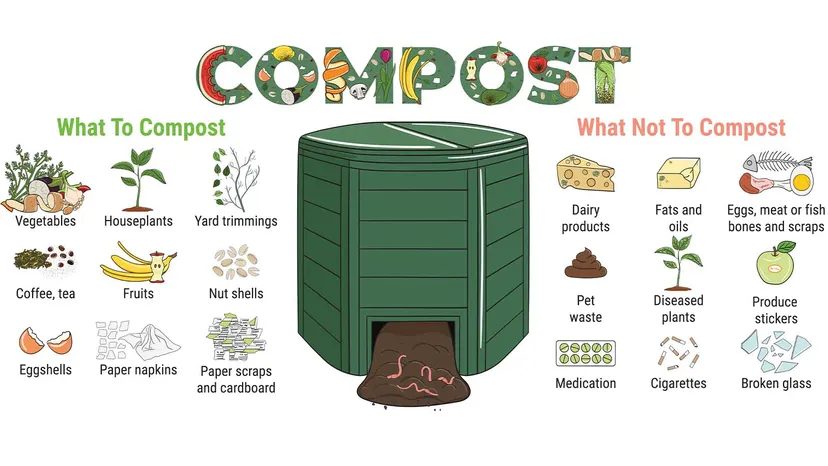
Do you think you’re helping the planet by throwing all the green and brown materials in the trash? You don’t. Some simply don’t belong. If you want to create nutrient rich soil instead of a failed composting process, you need to know what to leave out.
Immediate bans
Some items are too dangerous for standard home composting. Human or pet waste will result in immediate prohibition. Regular compost piles can harbor parasites and diseases that rarely reach temperatures that kill them. Cat litter also belongs to the same category. There is also an odor. You don’t want to walk past the compost or diapers.
Diseased garden plants are another problem. If you have late blight on your tomatoes or black spots on your roses, don’t throw them in. Pathogens can survive the decomposition process and contaminate the finished compost. It simply spreads the disease to the next crop.
Invasive weeds are hidden traps. Buttercups, morning glories, thorny grass, these are tough. Their seeds and spores can withstand heat and composting time. If you spread “gold” in your garden’s flower beds, the weeds will grow. You’re basically introducing weed seeds through your compost.
Charcoal ash is toxic to soil microorganisms. It raises the pH significantly and contains residues that kill the good bacteria you want to cultivate. Burning treated wood or charcoal briquettes can make the ash even worse. Skip it entirely.
Plant material treated with pesticides is the silent killer of the composting process. Pesticides do not break down quickly. They persist. Composting grass clippings or leaves that have been sprayed with herbicides can kill the microorganisms that drive decomposition. You might end up with a pile of sterile compost.
Meat considerations
You may be wondering how meat is composted. This is a common point of confusion. Yes, eggs can be composted. The shells provide calcium. However, meat and bones are different.
They take a long time to break down. Home compost bins rarely get hot enough to break down meat quickly. In order to denature proteins and fats, the internal temperature must be constantly high. Most backyard piles are around 90-120 degrees Fahrenheit. This is enough for leaves and grass. Not enough for meat.
So the meat remains. It rots. There is a smell. Your garden is starting to smell like rotting food. It attracts small animals. Raccoons, rats and stray dogs sniff the meat buffet. They tear up trash cans and bury them in the lawn. You lose your compost. It attracts pests. You’ll end up with ruined compost.
Municipal composting facilities are different. Larger facilities use active aeration and precise monitoring to achieve temperatures above 140 degrees Fahrenheit. Meat and bones can be processed safely. If your city has green waste bins, check their instructions. We can also accept cooked meat. But what if you have a lot of it in your backyard? Avoid adding meat.
Compost care and fertilization
Once you’ve separated the good from the bad, you have to feed the pile. This is not an isolated project.
Maintain the proportions
Aerobic decomposition requires a balance of carbon and nitrogen. Carbon sources are “browns”
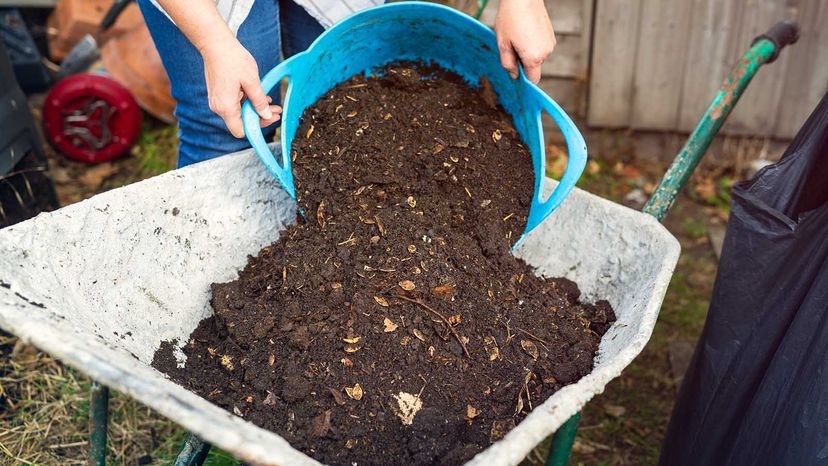
Layering is the rhythm of accumulation. It alternates between carbonaceous “brown” material and nitrogenous “green” waste. Add fresh soil to the surface to allow microorganisms to grow. Sprinkle water. Keeps it moist and not sticky.
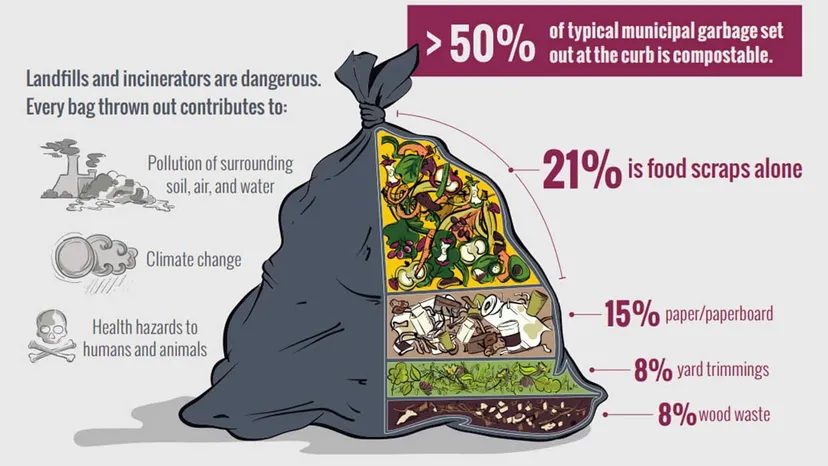
Now it’s a craft. The mountain must be turned. I go there every few days. Use a fork or shovel. If using a glass, twist the handle until the mixture is homogeneous. Oxygen is fuel. Without it, it just rots.
Basics of vermicompost
Want faster results? Add the worm. Vermicomposting. It’s not just about letting nature take its course. The idea is to invite certain guests. Earthworms will naturally find their way to where they come into contact with the soil, but you can speed up the process by purchasing special composting worms. You are intentionally planting seeds in the trash.
The mechanical structure of a standard toilet is simple. Adding new sand and turning the old sand over creates a mixture of intact sand and partially decomposed material. Sorted by gravity. The finished small particles sink to the bottom. The freshest ones stay on top.
Most commercial bins take this into account. There is a hatch at the bottom. Open it. Dig up the finished compost if necessary. 3 In warehouse systems, the logic is linear. Tank No. 1 receives untreated waste. Move the partially processed ones to another tray. Box No. 3 stores the finished product.
How to know when composting is complete
Chemical tests are not required. Composting is complete when you decide it is. But the signal is there. Please ignore at your own risk. If you ignore it, you can end up in a smelly pile that resembles a landfill.
The correct breakdown would be:
- Volume : Decreased. The standard size is reduced by 50-75%.
- Visual Effects : You may see bubbles forming. This is carbon dioxide released by active microorganisms.
- Color : Dark brown or black. Not the color of the original piece.
- Texture : Smooth. Easy to break. It should look like dirt, not garbage.
- Smell : Earthy. sweet. Like peat from moss. If it smells bad, you’re doing something wrong.
- Temperature : Warm. Microorganisms make food. On cold mornings you may see steam rising from the mountains. Heat means the process is active.
When these signs appear, your compost is ready. Now it’s a biological tool.
How to dispose of finished compost
Just don’t throw it away. Use it. Ready compost improves the structure of the soil. Increases microbial activity. Increase nutrient density. Balances pH and adjusts acidity as needed. Protects plant roots from temperature changes. Increases resistance to pests and diseases.
Most homeowners keep it to themselves. Spread it around the tree. Treat it as a garden bed. Some people start a business. The finished compost is sold to local nurseries and neighbors. But for the average DIY business, it starts and ends at the property line.
Composting in the 21st century
The methodology hasn’t changed much, but the tools have. Waste streams have also changed. We produce more plastic, more packaging and more complex materials. Classification by source is more important now than it was 10 years ago. Microorganisms don’t care about trash. It only takes into account what you put together.
Keep the layers thin. Maintains constant moisture. Turn it often. There’s nothing left to do but wait.
Composting is no longer just a vague hobby for the eccentric gardener. It’s practical, convenient and, frankly, essential if you want to stop sending half-eaten apples to the landfill. Whether you tend a small herb garden on your balcony or a large flower bed in the suburbs, homemade compost is the cheapest fertilizer you can use. It improves soil structure, retains moisture and provides nutrients for microorganisms that maintain plant vitality. Yes, it significantly reduces the amount of waste going to landfill from households.
The municipality’s edge program
If you live in the capital region, check the local waste management instructions. Cities like San Francisco are pioneering city-wide curbside composting, demonstrating that large-scale recycling of organic waste is possible. They were not alone for long. Portland, Seattle, Boulder and Denver have launched similar programs to create effective networks to keep large amounts of food waste out of the garbage stream.
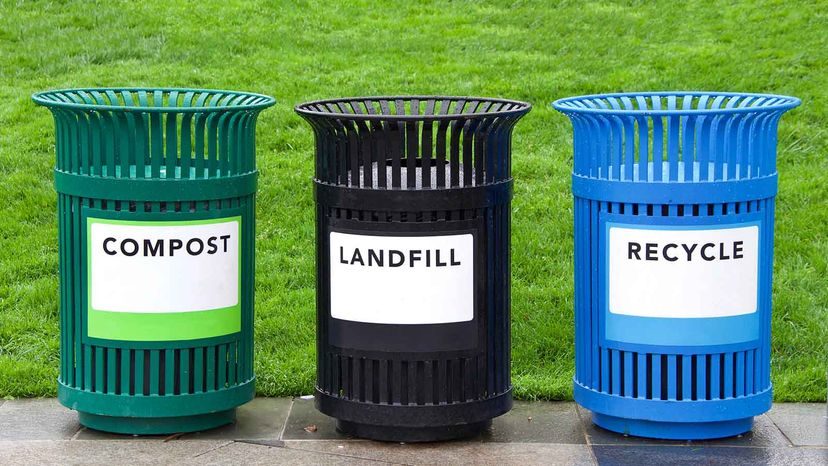
Installation is usually easy. There are three bins, one for rubbish, one for recycling and a special compost bin for garden waste and food waste. They are disposed of with general waste on the day of collection. City trucks transport them all to a large industrial composting facility where heat and ventilation are strictly controlled. This is different than the mountain in your backyard. Faster. It’s hotter. You can handle what you can’t handle.
Personal pickup service
Not all cities have urban planning. In these cases, private companies fill the gap. Services such as CompostNow, WasteNot Compost, and Compost for Life Miami offer home and commercial pickup. When you sign up, you get a bucket on your kitchen counter and we either deliver it to you or you pick up the contents weekly.
There is an intrinsic motivation factor here. These companies often sell their finished compost to residents. They send coffee grounds and eggshells to be processed and buy back the nutrient rich soil. This is a circular economy that is good for your wallet and your garden bed.
“Compostable” container trap
This is where most people burn. Let’s say you buy takeout from a restaurant with environmentally friendly packaging. The packaging says “biodegradable” or “compostable”. You throw it in the pile in the backyard. It’s sitting there. Nothing happened.
Why? This is because these containers require industrial composting conditions to break down. They require stable high temperatures that are rarely achieved with passive stacking in the backyard. Industrial facilities in San Francisco and Portland can accommodate them. Ohio State Dumpsters can’t do that.
There is one exception that is often overlooked. This is an oil-free pizza box. In cities with strong municipal programs, you can toss regular pizza boxes directly into the green bin. Fat is the enemy of home composting, but municipal processors can handle it. If in doubt, check local regulations. If in doubt, compost the food instead of the box.
Why bother composting?
Why trash cans cost money
Dealing with piles of rotting vegetables can seem like a daunting task. But there are cold and hard reasons to keep going. It saves money.
Look at Portland, Oregon. They compost all over the city. Green trash cans are collected weekly. We are open all year round. Just like recycling. What about your trash can? Once in two weeks.
Think about your kitchen. Small trash cans fill up quickly. When you throw everything away, you need a huge trash can that can hold two weeks’ worth of trash. Larger waste containers cost more. Pay according to the size of the waste cart.
Reduce food waste. Transfer to a compost bin. Now you can reduce the size of the trash can. The calculation is easy. A small trash can. Reduce your bill.
You may not live in Portland. it doesn’t matter. Most cities also charge based on the size of your trash. Disposing of food waste at home does not fill landfill trucks quickly. Smaller carts may be available. It’s real money that stays in your pocket.
Use gold on the grass
There is also another angle. Are you in the garden? OK
Commercial fertilizers are expensive. Compost bagged in the flower beds and vegetables in the garden will empty your wallet. Home composting changes the equation.
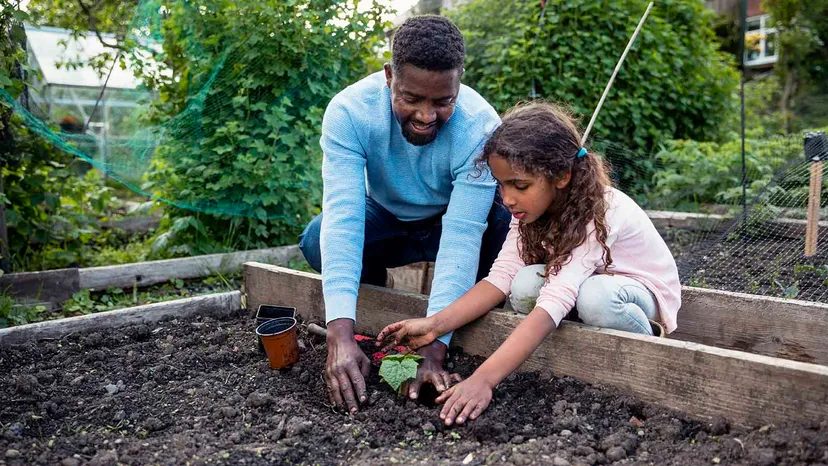
You don’t have to be an expert gardener. I just want the finished product. Spread it on the lawn. Pour it around the tree. It’s free. It’s really free. This is not a “sale” at a home center.
Prevent waste from entering landfills. that’s good. Helps plants grow. More plants means more oxygen. It’s a nice side effect.
But what’s the best part? satisfaction. You did this. With the help of small insect friends and earthworms. I feel a strange sense of pride in using fertilizer made from my own apple cores and coffee grounds.
Overall picture
It’s not just dirt. It’s about the system.
Most people think of composting as “gardening”. This is actually waste management. This is logistics. It reduces putting things on the ground that don’t belong there.
When you compost, you contribute to the cycle. The waste comes from the house. It is not left in a methane-producing landfill. It breaks down. It becomes soil. It provides nutrients to plants.
The benefits are additive. Reduced waste fees. Garden supplies are cheaper. The environment becomes cleaner. Better soil structure.
You don’t need fancy equipment. You don’t need a big backyard. All you have to do is separate the rotten part from the rest.
Start small. Collect skin. Add them up. Watch the heat rise. This is chemistry. This is biology. This is also very effective.
The question is, are you ready to stop paying for services that can be replaced with buckets and patience?