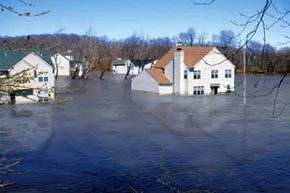
Wilmington, Vermont, feels like a postcard that never dried. It sits in the southern tip of the state, tucked near Mount Snow. You can smell the coffee and maple syrup from Dot’s Diner before you even see the building. Locals and tourists alike line up for blueberry pancakes thick enough to stop a bullet. Just down the road, Al Wurzberger’s 1836 Country Store sells cheddar and fudge that tastes like guilt. In summer, Main Street looks like a floral explosion.
Then came August 2011.
Hurricane Irene didn’t just pass through. It turned into a tropical storm and dropped enough rain to rewrite the town’s history. The Deerfield River, usually calm, became a weapon. Water climbed past the first floor of Dot’s. It hit the second floor. Most buildings didn’t survive without being stripped to their studs. The cleanup was messy. Mud everywhere.
Wilmington wasn’t unique. Across Vermont, houses floated like kindling. Covered bridges, which had stood for centuries, were gone. When the water receded, the real shock hit. Standard homeowners insurance didn’t cover the damage. These policies exclude surface water, overflowing rivers, and general flooding. They cover burst pipes. They cover leaking roofs. They don’t cover the earth swallowing your foundation.
Vermonters needed the National Flood Insurance Program (NFIP). Only 3,673 people in the entire state had it.
Зміст
How the National Flood Insurance Program works
The NFIP is run by FEMA. It’s a federal program. Private insurance companies generally won’t touch flood risk because the losses are too catastrophic. The government subsidizes the risk. You buy the policy through a private agent or insurer, but the government sets the rules and the rates.
Rates don’t vary by company. A policy in Hartford costs the same as one in Burlington if the risk factors are identical. The average premium sits around $520 a year for $100,000 of coverage on a home without a basement. If you have a basement? Expect to pay $615 annually.
The coverage is split. You can get up to $250,000 for the structure itself. Up to $100,000 for your belongings. Renters can buy this too. It covers “direct physical damage.” If the river takes your walls, NFIP pays. If your books get soaked? That falls under the personal property coverage.
Why standard policies leave you exposed
Most homeowners assume their insurance covers everything. It doesn’t. The line is drawn at the property line. Water coming from outside? Excluded. Water coming from inside plumbing? Covered.
This distinction exists because flood risk is geographic. You can’t insure a hurricane. You can’t insure a river breaking its banks. In 1968, Congress created NFIP because the private market had abandoned flood coverage. The goal was to help property owners rebuild.
The statistics are stark. In 2011, only 14 percent of U.S. homeowners had flood insurance. That’s a number that feels dangerously low. The South has the highest penetration at 19 percent. The Midwest sits at 13 percent.
If you live in a flood-prone area, this isn’t optional. It’s survival.
What to do when the water recedes
Filing a claim isn’t complicated. It follows the same rhythm as a standard homeowners claim.
- File the claim immediately.
- An adjuster will survey the damage.
- You must submit a “proof of loss” form.
You have 60 days to submit that form. Miss the deadline, and you might lose your coverage. The process is bureaucratic but clear. The government wants you to rebuild. They just need the paperwork to prove the flood actually happened.
Do you actually need it?
If you live in a flood zone, yes. If you don’t, you probably still should. The Deerfield River is tame until it isn’t. The 2011 flood proved that “tame” is a temporary state.
“Most insurance companies do not provide flood insurance on their own. The risks are too great.”
The NFIP bridges the gap between risk and survival. It’s not a luxury. It’s a financial firewall. When the rain comes, and it will come, you want to know that the money is there to put your life back together. Or at least the walls.

Why Bill Drinks and What It Costs You
Bill sits at the end of the bar. He sips something dark and steady. He lives near the river. Not far from my fishing hole. Winter 2010 to 2011 was brutal. Snow melted. Rain fell hard. The river swelled and swallowed his house. He had flood insurance. It helped him rebuild.
Most repairs finished by October 2011. Then came Irene. The storm that drowned Vermont hit Bill again. Flooded. A second time. Now I get why he drinks. Flood insurance covered the second round. Now he wants to sell. I don’t blame him.
How to Qualify for Coverage
Before you buy flood insurance, check eligibility. Nearly 20,000 US communities join the National Flood Insurance Program (NFIP). Communities must enforce floodplain ordinances. FEMA watches to ensure rules are followed.
If your community participates, you can buy coverage. It doesn’t matter if you’re in a high-risk or low-risk zone. If your community doesn’t participate, you’re out of luck. You can’t buy it.
FEMA holds nearly 100,000 maps. They show where high-risk and moderate-to-low-risk zones sit. Poor Bill already knows his risk level.
If you live in a high-risk zone and have a federally-backed mortgage, the law forces you to buy coverage. The reason is simple math. Buildings in high-risk areas have a 26 percent chance of flood damage over a 30-year conventional mortgage term.
Should You Buy in Low-Risk Zones?
The law doesn’t require flood insurance in moderate-to-low risk areas. You should buy it anyway.
FEMA data shows residents outside high-risk zones file more than 20 percent of NFIP claims. If you are in a moderate-to-low-risk zone, you can insure up to $200,000 for your house and possessions.
Costs vary. Expect to pay roughly $405 a year if you have a basement. $365 a year if you don’t. Even if you live on a hill in a low-risk zone, get it. Hillside properties face mudflow risks. Flood insurance covers that damage.
The Safety Tip
Just because you’ve never flooded doesn’t mean it won’t happen. Hurricanes can cause it. Damaged levees. Clogged drainage systems. Rapid rainfall. All covered by flood insurance.
Ask Bill. Ask Vermont.
What the Policy Actually Covers
The standard policy pays for “direct physical damage” to a home. It’s available in flood-prone areas. Most standard homeowners policies cover water from bursting pipes or broken faucets.
What isn’t covered? You need a separate policy for what’s inside the building. Standard flood insurance doesn’t protect you when a river overflows its banks. Surface water running into the house is excluded. That’s why Congress created the NFIP in 1968. It helps owners rebuild and replace belongings after a flood.
How Claims Work
Filing a claim works like a regular homeowners insurance claim. An adjuster surveys the damage after you file. You must submit a “proof of loss” form. You have 60 days to submit it to the insurance company.
Who Sells the Policy?
FEMA doesn’t sell flood insurance directly. The agency works with private insurance companies. They sell coverage to customers. The government sets the rates. Rates do not change from company to company. Or agent to agent.
Average Costs
The average yearly premium is $520 for $100,000 in coverage for a home without a basement. $615 a year for a home with a basement.