Let’s skip the TikTok horror stories about eating laundry and dishwasher pods. That chapter is closed. The real question for homeowners right now is whether pods are just a marketing gimmick or a genuine upgrade in cleaning technology.
Dishwasher pods have become a staple in modern kitchens, promising a mess-free routine. But how do they actually compare to traditional powder and gel detergents? Is the convenience worth the price tag? And more importantly, do they clean better?
To cut through the noise, we need to look at the chemistry. We spoke with Morgan Eberhard, a senior scientist at Cascade, to break down exactly what happens inside your machine.
Зміст
The Chemistry of Clean
Before comparing formats, it helps to understand what dishwasher detergent actually does. It is not the same as hand dish soap. If you have ever dumped hand soap into a dishwasher in a pinch, you know the result: a mountain of suds that overflow and make a massive mess. Those suds suffocate the water needed to rinse dishes clean.
Dishwasher detergent is a complex cocktail. According to the American Cleaning Institute, it contains:
- Surfactants: These are the workhorses. They remove grease at a molecular level. Part of the surfactant attaches to water molecules, while the other part latches onto food soils, lifting the grease off your plates.
- Builders (Chelants): These prevent spots and film from forming on glass and metal.
- Corrosion Inhibitors: These protect your dishwasher’s internal components and dishes made of metal from rust and degradation.
- Chlorine Compounds: These aid in sanitizing and breaking down stubborn stains like coffee and tea.
The formulation is designed to work with high heat and low foam. It is precision-engineered.
How Pods Are Made and How They Work
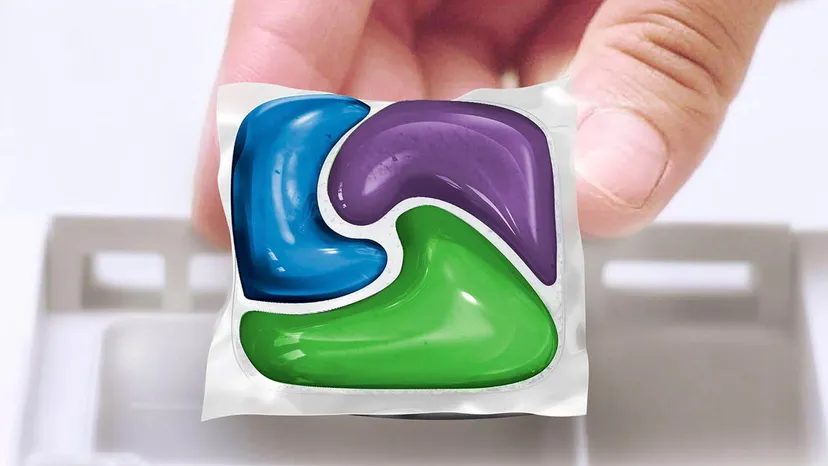
Dishwasher pods look simple. They look like a fortune cookie. Please do not eat them.
Inside that water-soluble film lies a premeasured dose of concentrated detergent. The film is made of polyvinyl alcohol, a material designed to dissolve quickly in hot water.
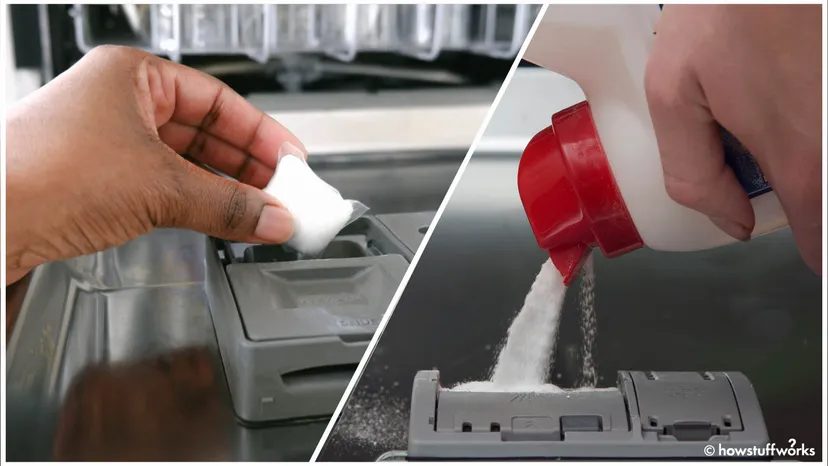
Most people know the drill: open the door, load the dishes, scoop the powder or squirt the gel into the dispenser, and hit start. Pods remove the measuring step. You just toss the pod in.
“These pods are created with premeasured doses that are more concentrated than powder or gel detergents alone, so you know you’re getting the right amount of each ingredient in each dishwasher load.”
This concentration is key. Because the detergent is not exposed to air before use, it stays potent. Eberhard notes that by separating the powder components from the liquid top, pods like Cascade ActionPacs deliver the best properties of both forms.
When the cycle starts, the dispenser opens. The pod is released into the wash water. The film dissolves immediately. All the detergent disperses into the water.
Then the physics take over. The machine circulates 1.5 to 2 gallons of water through rotating spray arms. This chemistry hits the food soils and grease, breaking them down.
Polymers in the detergent then keep those broken-down soils suspended in the water. They do not let the dirt settle back onto your plates. It all rinses down the drain.
Which Detergent Format is Better for You?
There is no single “best” detergent. It depends on your habits and your machine.
Pods offer convenience. You do not have to measure. You do not have to worry about clumping. The dosage is consistent every time. However, they must fit in your dispenser. Some older or smaller dishwashers have compartments that are too small for standard pods.
Powder is often cheaper per load. It is widely available. It works well in hard water areas because of the high concentration of builders. But it can clump if it gets wet before use. You also have to measure it correctly. Too little, and your dishes stay dirty. Too much, and you risk residue.
Gel pours easily. It does not clump. It is good for pre-rinsed dishes. But it can be messy to handle. You might spill it on the door seal. It also tends to be more expensive per load than powder.
If you want a mess-free experience and your dishwasher fits pods, they are a solid choice. The premeasured nature eliminates guesswork. You get a concentrated dose of surfactants, builders, and inhibitors every time.
But if you have an older machine or buy detergent in bulk to save money, powder remains a reliable option. Just keep it dry.
The science behind these detergents has not changed much. The surfactants still lift grease. The builders still prevent spots. The difference is in how the ingredients are packaged and delivered.
Pods simplify the ritual. They remove the variable of human error in measuring. For many homeowners, that simplicity is worth the extra cost.
For others, the manual control of powder is preferable. They want to adjust the dose based on how dirty the load is.
There is no moral superiority in either choice. Both use the same core chemistry to fight grease and stains. The battle is not between pod and powder. It is between convenience and cost.
Pick the format that fits your kitchen. Then load the dishes. The water will do the rest.
Comparing Dishwasher Pods vs Powders
Your choice between pods and powder comes down to one thing: how do you actually want to handle the cleanup? If you don’t even own a dishwasher, the whole pod debate is irrelevant. But for those of us scrubbing by hand or running a machine, the logic shifts.
Pods are premeasured. They contain a scientifically formulated amount of detergent designed to tackle a standard load. This consistency often leads to better cleaning results. There is less room for human error.
But what happens when your load isn’t standard?
If your rack is half-empty, a pod might leave behind residue. You’ll see bits of undissolved film on your glassware. If your rack is stuffed to the gills, you might be tempted to toss in a second pod. Don’t. Overloading the machine with detergent doesn’t mean cleaner plates. It just means suds overflow and potential damage to the unit. You end up waiting for a full load anyway.
Powders and gels offer flexibility. You can adjust the amount based on soil level and volume. No waiting. No guessing if the water temp is right for a complex capsule.
However, pods win on convenience. They are mess-free. No measuring cups. No dust clouds of powder. Some brands, like Cascade ActionPacs, mix powder and liquid formulas. This combo allows you to skip the prewash cycle. Just load and go.
Cost is the real tradeoff. Pods generally cost more per load than powders. If your budget is tight, stick to the basic powders. They get the job done for less.
Did You Know?
The first practical dishwasher wasn’t an electric marvel. It was invented by Josephine Cochran in 1886. She designed it for the large hotels and restaurants that struggled with staff turnover and broken china.
Her machine was hand-operated. Users had to turn a wheel with a hand crank on the outside. It wasn’t until later that she pivoted to home models. Her company evolved into what we now know as KitchenAid.