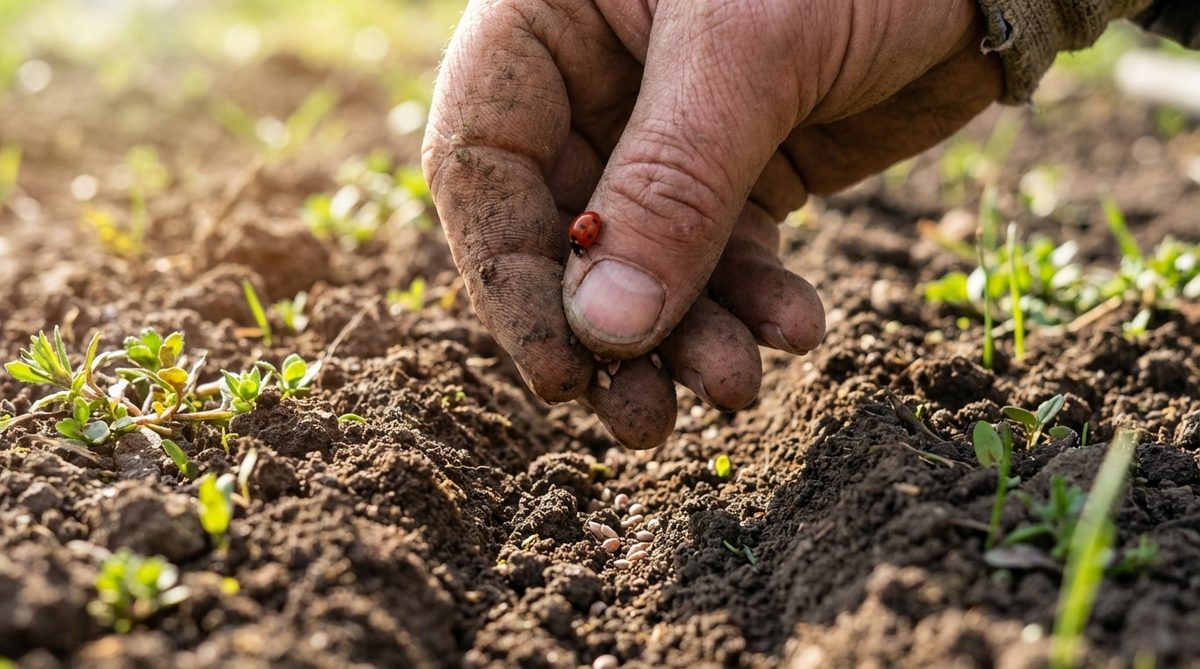
Every spring brings the same cycle. Excited, you pull out your seed packets, sprinkle everything you can find into the soil, and three weeks later, you’re staring at the stunted, sad-looking seedlings and wondering what went wrong. Here’s the truth: everyone makes these mistakes. The bad news? If you repeat them year after year, your vegetable garden will continue to disappoint you.
Зміст
Planting too early: the trap of impatience
It’s the end of February. The sun is back and you rush outside to plant tomatoes and zucchini directly in the ground. The frost comes in mid-March and burns them before you’ve even had a chance to see true green leaves. Adherence to planting dates is the first rule of gardening. Each vegetable has a specific germination and growth window. If you try to rush this process, you are essentially signing your plants death warrant.
Check the lunar calendar or the regional planting map for the correct time. Starting too early in a cold soil not only slows growth; it invites rot and disease. Patience isn’t just a virtue in gardening; it is a prerequisite for survival.
Neglecting soil preparation: expensive oversight
Is your soil compacted? Is it missing nutrients? Maybe it’s still wet from the winter rain. If you plant directly without preparation, the vegetables will suffer from day one. A healthy garden starts with healthy soil.
You need to amend the soil with well-aged compost. Loosen the surface to improve aeration, but avoid deep digging as this can destroy soil structure and worm habitats. Check if drainage is sufficient. If your soil resembles concrete, start there. A living soil with active earthworms is the foundation of everything else. Don’t skip this step or you will have to pay for it for the whole season.
Watering Mistakes: Finding the Balance
Watering is often an obsession of novice gardeners. Either you forget about it for a week or you flood your plants every morning out of guilt. Both extremes are catastrophic. Deep, infrequent watering is much better than shallow, daily watering.
Intensive watering promotes the downward growth of the roots, making the plants more resistant to drought. Always water the base of the plant, never the leaves. Wet leaves, especially in the evening, are a highway for fungal diseases. Find a middle ground and your plants will thank you.
Poor companion planting: Enemies in the garden
Did you know that some vegetables wage an all-out war when planted next to each other? Onions and peas don’t mix. Fennel is practically incompatible with most other plants. Planting tomatoes next to potatoes accelerates the spread of late blight. Planting companion plants requires research before digging.
On the other hand, some pairings are magical. Carrots and leeks protect each other from insects. Tomatoes and basil are old friends. Reading a little in advance will save you a disappointing harvest and wasted space.
Tight rows: Less is more
We all tend to plant too densely because leaving empty space feels like a waste. That’s a bad idea. Plants that are too close together compete for water, nutrients and light. They weaken each other and become easy targets for pests and diseases.
Follow the recommendations on the seed packages, even if they seem too big. An airy garden is a healthy garden. Give the plants room to breathe and grow.
Skipping Protected Starts of sensitive species
Tomatoes, peppers, eggplants and melons need a warm, sheltered start before they go outside. If you sow them directly outside in March, you will lose valuable time and take unnecessary risks.
Place in a small cold frame, mini greenhouse or simply in pots on a sunny windowsill. These few weeks of protected growth make a huge difference to the vitality of the plants when they are eventually transplanted. Don’t miss this advantage.
Ignoring crop rotation: a costly oversight
Planting the same vegetables in the same place every year weakens the soil and leads to family-specific diseases. Tomatoes in the same place year after year? Welcome blight and nematodes.
Rotate your plants on a 3-4 year cycle. This is the foundation of a long-term healthy garden. Divide your plot into zones and alternate families: nightshades, squashes, legumes, brassicas. Your soil will recover and remain productive.
Leave out the mulch: unnecessary work
Pulling weeds every week in the heat of July? Water twice a day in the summer heat? Losing topsoil due to heavy rain? This is life without mulch.
A good layer of organic mulch – hay, straw, wood chips or dead leaves – makes all the difference. It retains moisture, regulates soil temperature, suppresses weeds, and feeds microbial life as it decomposes. Apply mulch in April and you’ll be grateful all summer long.
Don’t notice pests until it’s too late
Slugs love tender spring seedlings. Aphids will settle on broad beans before you know it. Flea beetles leave lacy holes in radishes in a few days. Regular monitoring is the best prevention tool.
A daily check, however brief, will allow you to spot the early signs of an infestation and act before it gets out of control. Hand-picking, herbal sprays or natural repellants work best when applied early. If you wait too long, the damage is done.
Giving up after early failures
The real enemy of any garden is discouragement. A seed that doesn’t germinate, a slug infestation that destroys a row, a tomato that rots before it ripens – it happens to everyone, even experts.
Look at each failure as a lesson for the next season. Take notes. Adjust. Try again. Consistency and attentiveness are the real keys to a productive garden. And the day you eat your first homegrown fully ripe tomato, you’ll forget all the headaches.