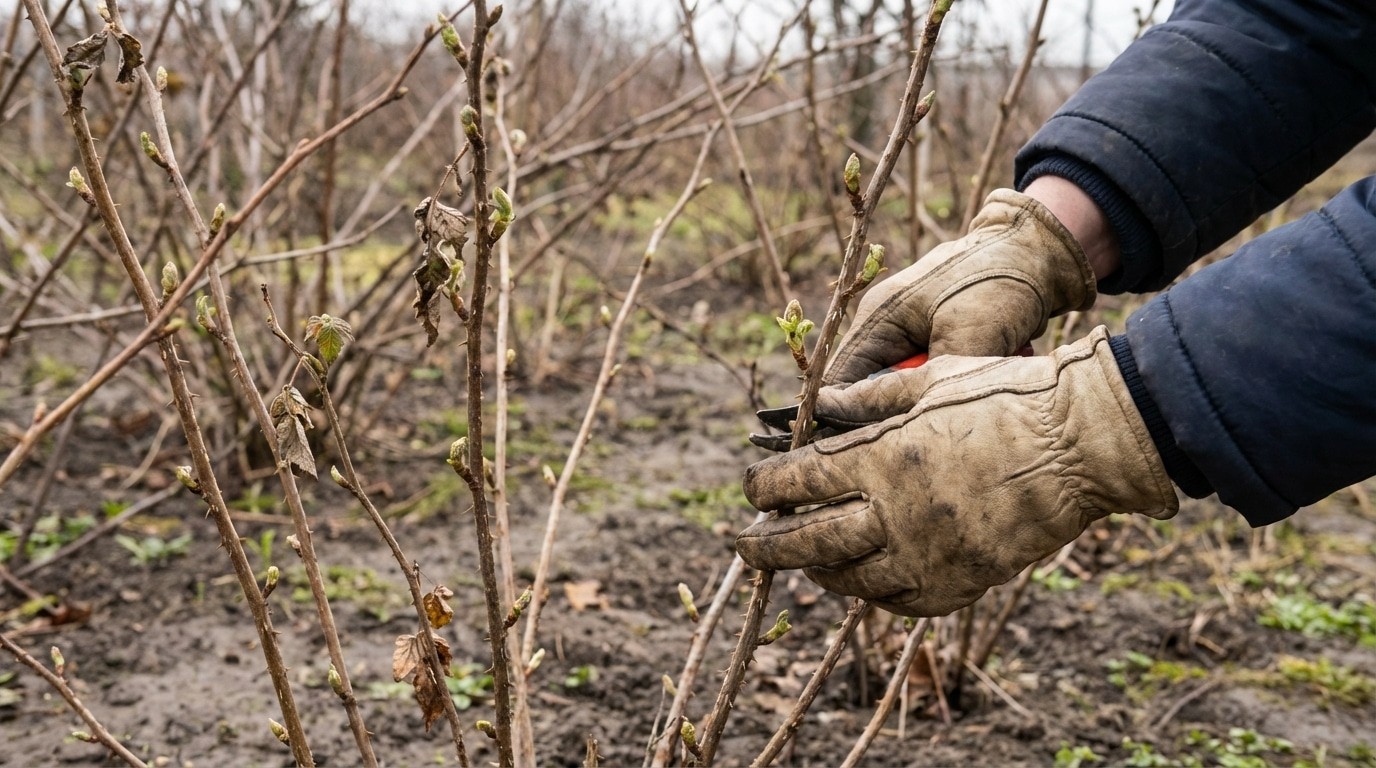
The air is finally losing its bite. February is coming to an end, and if you’ve been keeping an eye on your garden, you’ve noticed a change. The ground is waking up. For raspberry growers, this is a key point.
Most people ignore their bushes. Or they do a half-hearted pruning, snipping off dead tips for fear of making a mistake. That in itself is a mistake.
There is a special, professional technique for pruning everbearing raspberries that sounds extreme but works every time. It will doubles your yield. It reduces the pressure of the disease. And that requires you to cut them back to the ground.
Forget light pruning. To transform your patch this spring, you need to be ruthless.
Зміст
Timing is everything: end of February window
When it comes to gardening, timing is important. Not just dates, but biological windows.
The end of February is the ideal time in most temperate zones. The worst low temperatures are receding. If you cut too early – in January – you expose fresh wounds to frost. This tissue dies. The plant weakens. If you wait until March, the sap is already rising quickly. The cut then causes the plant to “bleed” and wastes energy that should go into growth.
At the moment, the plant is still resting on the surface. But down in the soil? The roots are stirring.
Pruning forces the plant to convert all of its stored energy into new growth just when it is needed. It’s a sync trick. You are hacking the system to maximize response.
Identify Your Varieties Before You Swing
Stop before you touch the scissors. You need to know what you are growing.
This cruel pruning method applies only to everbearing (or remounting) raspberries. These varieties bear fruit twice: once in early summer on old wood and again in autumn on new wood. If you cut these back to the ground, you’ll get a huge crop in late summer and fall.
If you cut primocane or non-perpetual varieties (which bear fruit only once in early summer on last year’s wood), you will lose your crop entirely. You have nothing left.
How can you tell the difference in late winter?
Look at the tips of the canes. At the top of the everbearing canes are often dried, shriveled remains of last fall’s berries. If you don’t remember, think about your harvest. Did you pick fruit until the first hard frost in October? If so, you have everbearing raspberries. They are ready for the chop.
10-Cut Rule: Why less is more
Here is a secret that most Home Gardeners miss. They treat the canes like tree branches. They don’t do that.
With everbearing raspberries, the only way to ensure a quality crop is to cut all of them. Not just dead parts. Not just tips. All of it.
Leave only 5-10 cm above the soil.
Looks like you killed the plant. It looks like a stump field. That’s the point.
This is called “head cutting” or severe renewal pruning. It removes old, tired wood that has already done its job. It prevents the plant from wasting energy and maintaining weak, disease-prone canes. Instead, the plant has to focus all its energy on growing new, strong shoots from the base.
The Biology of the Cut
If you remove the above-ground parts of the plant at the end of winter, you disturb their hormonal balance. The roots have spent the whole winter storing energy. Now that there are no more leaves to support it, this energy can only flow to the buds at the base of the crown.
The plant reacts immediately.
It drives new shoots or “suckers”. These new canes are different from the old ones. They didn’t survive last winter’s storms. They have not been used up in the previous fruiting period. They are fresh. They are straight. They are packed with raw sap.
This new wood is where the fruit will form.
Think of it this way: every spring you replace a clogged, old engine with a new engine block. The result is fruit that is larger, firmer and significantly less susceptible to the fungal attacks that attack neglected, overcrowded bushes.
It feels wrong to cut it all away. But the plant prefers it. And your harvest proves it.
Why surgeries are important: Hygiene and disease control
This is not just folklore. Backed by hard data. The research will be carried out by the Center for Interprofessional Technology in Fruits and Pulses (CTIFL) between 2020 and 2024. They specialize in a certain way of cutting a raspberry cane into the ground.
result? The disease has decreased dramatically.
Cutting the sugar cane à ras (flushing it with soil) removes the source of infection. You have really taken the problem. Fungal spores like rust and anthracnose? Gone. Do the eggs of winter insects hide in a cracked shell? Gone. I do a deep clean of everything before the start of the new season.
This is not a theoretical matter. New growth appears in the disinfected environment. Airflow at the bottom improves immediately. Permanent moisture eliminates hiding places and promotes cryptogenic diseases. If there are fewer diseases, there are fewer drops. Even organic processing is no longer needed. This is the basic principle of sustainable gardening.
产量和时间:初夏丰收
房主关心水果。 削减一切会毁掉收成吗?
不,它改变了它。
人们普遍认为,硬修剪会延迟生产。 数据显示相反的情况。 它对结果进行分组。 它使它变得有规律。
从根部长出的新藤条非常有活力。 它们生产更大、更甜的浆果。 而且他们做得很快。 你经常会看到从六月开始就迎来丰收。 该植物不会浪费能量来喂养老旧无用的木材。 它集中所有资源来结出果实。
还有一个实际的好处。 挑选变得更容易。 不再潜入枯枝布满荆棘的迷宫。 果实挂在可触及、通风的茎上。 你可以看到它。 你可以达到的。
工具包:锋利的剪枝器和正确处置
你无法使用迟钝的工具来做到这一点。 压碎的茎会引发疾病。 您需要带有锋利刀片的修枝剪 。 首先清洁它们。 使用酒精或白醋。 不要将病原体从一丛灌木传播到另一丛灌木。
切口必须干净。 使其稍微倾斜。 这样可以防止雨水积聚在伤口上。 伤口上的积水会导致腐烂。
目标高度为距土壤 5 至 10 厘米。
不要将插条留在那里。 把每根手杖都耙起来。 不要将它们堆肥。 老木头可能含有病孢子。 如果将它们堆肥,就有可能污染未来的土壤。 删除它们。 如果当地法律允许,可以烧掉它们。 或者将它们带到废物处理设施。 清洁度是不容谈判的。
Instant mulching: Locks in moisture and prevents weeds.
Cutting is only half the job. The other side is exposed to protect the soil.
When the stick disappears, the ground is revealed. It dries up. The weeds started to spread. You must act now.
Cover immediately. Use wood chips, BRF, straw or dried leaves. It will get thicker. The depth is about 5-10 cm.
This layer does three things:
* Locks in spring moisture. New shoots need water to grow.
*Gives the soil life as it decomposes.
* Kills weeds. Weeds compete for nutrients. You don’t want that kind of competition during the critical restart phase.
A bed with a roof is a living room. Supports the explosive growth of new canes.
回报:六月篮子
这就是愿景。 你在二月下旬完成。 你有锋利的工具。 你有干净的土壤。
快进到六月。 你的覆盆子行是结构化的。 叶子是深绿色的。 没有斑点。 没有枯萎病。 新的茎高高地向着太阳。 它们开花了。 他们结出果实。
这种方法可以改变思维方式。 覆盆子不再是对抗杂草和疾病的药物。 它们是一个受控的、高效的系统。 彻底的削减是仁慈的。 它重置工厂。
回报就是活力。 这是慷慨。 篮子里装满了。
现在就磨利你的刀片。 计划收获。 夏季的蜜饯始于冬季寒冷的彻底切割。