The urban jungle is changing. Quietly and revolutionarily, it transforms gray concrete into green pockets. Dwarf fruit trees occupy balconies, terraces and windowsills. You no longer need a spacious garden. Just a few square meters of space, a little creativity and a little patience to pick crunchy apples, sweet cherries or juicy pears right from your fingertips. It’s not just about gardening. It’s about reconnecting with nature in the city. It appeals to both curious beginners and experienced gardeners. Why the sudden obsession? How did these miniature trees become the stars of the balconies of Paris and Marseille? Let’s dive in.
Зміст
Why city dwellers love dwarf fruit trees
The dream of a personal orchard has never been so accessible. Not in 2025 and not anymore. You can enjoy the taste of homegrown fruit without leaving the city limits. But why is this happening now?
Recent studies in France show that more than one in four residents want to grow their own fruit. This is not a passing fad among enthusiasts. It’s a deep-rooted desire. People long for the orchards of the past. They want to pass this skill on to their children. They long for the social ritual of sharing a handful of cherries with friends at sunset. Social media and design magazines fuel this. Every corner becomes a potential green sanctuary.
The roots of this movement are the longing for authenticity. It’s about food autonomy on a small scale. It is perfect for modern city life.
Hidden benefits of compact fruit trees
Dwarf fruit trees offer more than just a small footprint. Their adaptability is their superpower. A well-chosen pot is often enough to create a thriving mini-orchard. These trees thrive even in the tightest spaces.
The maintenance work is significantly less than with traditional fruit trees. No dangerous ladders. No heavy chemical treatments. Simple care routines bring a bountiful harvest. This respects both the urban environment and your neighbors.
These trees are economical. They are decorative. They are long-term partners. They deliver fresh, pesticide-free fruit straight to your kitchen table.
Where to plant: Balconies, terraces and windowsills
The magic of dwarf fruit trees unfolds exactly where you least expect it. When the first warm days come, the balcony changes. The trees bloom in full bloom only to collapse under the weight of the delicious, small fruits.
Imagine a windowsill full of cherry bunches in June. Imagine a patio supported by a handsome columnar pear tree standing proudly between two lounge chairs. In the city, every harvest feels like a small victory. It is a source of pride. It’s pure joy.
This innovation is again related to tradition. Historically, townspeople grew laurels, lemon trees and figs in pots on Haussmannian balconies. Today, this passion has been modernized. It is shared openly. It brings joy to everyone involved.
The most popular dwarf fruit varieties for the container garden
Many fruit trees are well suited to pots. However, certain varieties have become essential. They offer high productivity and impressive beauty. Here are standout options for urban growers.
Ballerina Apple Tree: graceful and productive
The Ballerina apple tree impresses with its slim, vertical shape and lush flowers. Because its vertical shape resembles a pointe dancer, it is also called a “columnar tree” and fits seamlessly into compact spaces.
You only need one square meter to place this gem. Apples, whether red or golden, are ready to eat in late summer. Their sweet taste and crunchy texture are a big hit among young city dwellers.
One ballerina tree typically produces three to five kilograms of fruit per year. It’s enough for homemade applesauce or fresh apple tart.
Dwarf cherry tree: A compact flavor festival
The dwarf cherry tree symbolizes sociability. This mini variety rarely grows more than 1.5 meters tall. It thrives in full sun or partial shade.
Its white flowers in April add a poetic touch, followed by an abundance of red, juicy cherries in June. Modern cultivars such as ‘Griotella’ or ‘Compact Stella’ are ideal in pots. They are space-saving, durable and highly productive.
In addition to taste, these cherry trees attract birds and pollinating insects. They actively promote urban biodiversity.
Columnar pear tree: elegant height
Refined and original columnar pear tree is characterized by a straight, thin trunk, shiny leaves and elongated fruits. It attracts attention and becomes the star of many modern balconies.
The fruits are of a standard size, but surprise with subtle flavors and a smooth texture. Less common than apples in an urban environment, the columnar pear appeals to those looking for elegance and novelty.
Easy to care for and resistant to diseases promises a regular harvest from the second year. It offers significant ornamental value and produces fruit.
Growing dwarf fruit trees on a balcony is less about gardening and more about creating a microclimate for edible success. You are building a system that balances root space, drainage and sunlight. If you fail at any of these, you’ll end up with a sad, green bush. If you manage to do it, you will get fresh fruits.
Choose the right pot, soil and location
Start with the container. Size is more important than aesthetics. You need a pot with a volume of at least 30 liters. Smaller pots dry out too quickly and prevent root growth. Make sure there are drainage holes in the bottom. If there is water, the roots will rot.
The choice of material changes the thermodynamics of the pot. Terracotta is breathable, regulates humidity and keeps the roots cool in summer. Containers made of resin or wood retain heat better, but can overheat the roots in direct, strong sunlight. Choose based on your climate.
The soil mix is your foundation. Do not use garden soil; it compacts and suffocates the roots in the pot. Instead, mix one-third horticultural compost, one-third mature compost and one-third coarse sand. This creates a structure that stores nutrients but can drain freely. Add a layer of clay pebbles or gravel to the very bottom to prevent waterlogging.
Light is fuel. Dwarf fruit trees need full sun. Aim for six hours of direct sunlight daily. If your balcony is exposed to strong winds, the tree will stress. The wind dries the leaves faster than the roots can replace the water. A sheltered location produces better fruit.
Care: Watering, pruning and feeding
Watering is the most common task. The root ball of a dwarf tree in a pot dries out quickly. Do not let it go bone dry. Check the soil daily in the summer. Water when the top inch feels dry. Consistent moisture promotes fruit set. Irregular watering causes the flowers to drop before they turn into fruit.
Pruning keeps the tree manageable and productive. Carry out light pruning in autumn or early spring. First, remove the dead wood. Then open the center of the tree to let in the light. Dwarf trees need air circulation to prevent fungal problems. You are not shaping a bonsai; you are maintaining a small orchard tree. Keep your balcony compact, but don’t cut it too much.
Feed the tree every two months. Use organic fertilizer or homemade compost tea. Synthetic salts can burn roots in tight spaces. Organic matter improves soil structure over time. This constant supply of nutrients supports both leaf growth and fruit development.
Overcoming challenges: pests, pollination and urban growth
City balconies are not immune to pests. Aphids and powdery mildew are common. They thrive in stagnant air and dry conditions. Prevention is better than cure.
If you spot aphids, spray them with black soap or nettle. These natural treatments control pests without harming beneficial insects. Avoid harsh chemicals that will remain on your future fruit.
Pollination is a logistical challenge on isolated balconies. Bees may not be able to reach your floor. You have two options. First, plant compatible varieties at a distance of ten meters from each other. Second, assist the process manually. Gently shake the branches during flowering. This mimics wind and vibration to helping transfer pollen. Some self-fertile varieties require less support, but cross-pollination often increases yields.
Designing a productive and decorative balcony
The fruit balcony should look good. Functionality does not require ugliness. Arrange the trees to create a structure. Use a linear row for narrow balconies. Group them in a square to define the seating area. Place one specimen in a colorful pot to anchor the entrance.
Use the height to your advantage. Stack the pots on racks or shelves. This creates visual depth and maximizes floor space. Add decorations such as lanterns, fairy lights or wooden trellises. The contrast of rough wood, bright flowers and ripening fruit creates a dynamic presentation.
Transparency and natural materials work best. Glass tables, rattan chairs and stone pots blend into the greenery. The goal is to create a “secret garden” feeling even on a concrete slab.
Mix flowers, vegetables and fruits
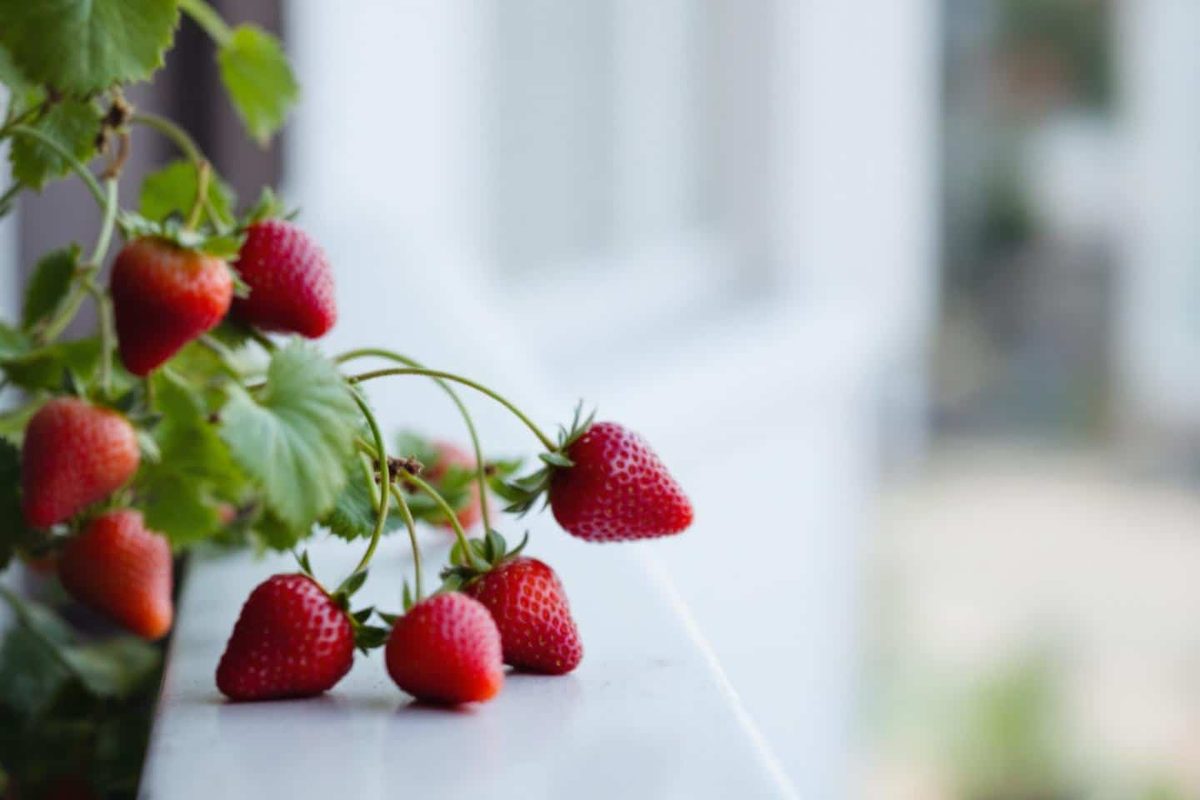
Companion planting on a balcony adds interest. Ballerina apple tree goes well with strawberry plants. Strawberries cover the ground, which reduces evaporation. Cherry tomatoes also thrive near apple trees.
Pear trees look striking next to climbing nasturtiums. Flowers provide color and attract pollinators. This diversity attracts bees and bumblebees to your balcony. More pollinators means better fruit set.
In autumn, the mix changes. The leaves of the fruit trees turn into warm shades of yellow and red. Combine them with ornamental cabbage or marigolds. Seasonal change keeps the balcony interesting all year round. They create a living tableau that is both beautiful and edible.
Community and shared success
The joy of urban fruit growing is often shared. Social media is full of pictures of small cherry crops or the first homegrown apple. These small successes are celebrated with enthusiasm. They inspire others to try it.
Local gardening groups are formed in many cities. Neighbors exchange cuttings and tips. They share their knowledge of which varieties grow best in specific microclimates. This community spirit makes the hobby more rewarding.
Each successful harvest contributes to a shared sense of accomplishment. It transforms isolated balconies into a larger green network. The work is genuine. The results are sweet.
The trend is not just snacks on a railing. It changes the way city dwellers see nature. It brings seasonality back into focus. This means you can see every square inch of your home differently.
Growing fruit in the concrete jungle
Planting a dwarf fruit tree will reconnect you with simple actions. It teaches patience. It shows kids how nature works. You watch the buds open. You’re watch the fruit swell.
The Harvests might be small. Or they could be plentiful. Either way, the taste is real. It is better to eat an apple you have picked yourself than to buy an apple wrapped in plastic any day. The city feels less cold when you notice the space it offers.
This movement has been growing rapidly since 2020. It’s fits into slow gardening. This means quality over quantity. It means enjoying the process.
From dream to first harvest
Start with the basics. Dwarf apple trees are a good choice. Look for the ballerina type. Dwarf cherry trees also work. Columnar pear trees are another good option. These are forgiving for beginners.
Go to specialized nurseries. Don’t buy from random big-box stores if you can avoid it. Ask the staff to match the plant to suit your climate. Check the exposure of your balcony. Is it sunny? Shady? Windy? Choose suitable plants.
Buy grafted trees. That’s the key. The grafted stock is durable. It bears fruit faster than trees grown from seed. You save years of waiting.
Maintenance is all about consistency. Watch the water. Look for buds. Celebrate when it blooms. Growing fruit in a pot means creating a green haven nearby.
It is accessible. It’s colorful. It’s really fun. This is not just a passing fad. It reuses urban space. It puts nature back at the center of everyday life.
Seeing a good crop between concrete and asphalt inspires you to try it. Your balcony can become a mini orchard. Imagine eating your own Ballerina apple on the patio. Or dwarf cherry. Or a columnar pear.
The soil is ready. The pots are waiting. What are you going to plant?