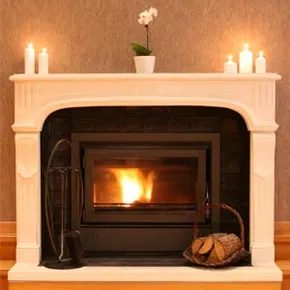
There is a specific, primal comfort in watching a fire burn. It’s cozy. It’s inviting. But if you are relying on that traditional open hearth to heat your home during a freeze, you are likely losing more heat than you are gaining.
Traditional fireplaces—whether old masonry or factory-built—are notoriously inefficient. They suck warm air out of the room and send it straight up the chimney. When the temperature drops below freezing, the exhaust actually pulls more energy from your home than the fire produces. The Hearth, Patio and Barbecue Association rates older open fireplaces at just 5% to 10% efficiency. That is a massive waste.
Enter the fireplace insert.
An insert is essentially a fireproof box made of steel or cast iron, fronted by insulated glass. It turns an open, leaky firebox into a closed combustion system. The metal traps the heat, and many models include a blower to push that warm air back into the room through front vents. Properly installed, these units act as highly efficient supplemental zone heaters, drastically reducing the fuel you need to burn to stay comfortable.
You can find inserts for gas, propane, wood, pellets, coal, or electricity. But for many homeowners, electric fireplace inserts offer the best balance of aesthetics, ease, and low maintenance.
Зміст
Why Choose an Electric Insert?
Consider the labor involved in a traditional wood fire. You have to gather materials. You might need an axe. You have to haul wood, store it properly, and ensure it is seasoned. Then comes the setup: paper, kindling, and the inevitable smoke that gets in your eyes if you forget to open the flue. Afterward, there is the ash cleanup.
An electric insert changes the game. You push a button. Maybe it’s on a remote. The flames appear. No smoke. No ash. No hauling.
How Electric Fireplace Inserts Work
Electric inserts are the simplest option on the market. Because there is no combustion, there is no need for venting. You don’t need permits. You don’t need a chimney sweep. You just plug it in.
These units contain a small heater capable of outputting up to 5,000 BTUs (British Thermal Units). Reflective lights mimic the flicker of real flames, and many models let you adjust the flame size independently of the heat. This is a key feature if you live in a warmer climate—you can enjoy the look of a fire without the extra warmth.
Installation: A Matter of Minutes
The biggest advantage of electric fireplace inserts is how easy they are to install. Unlike gas or wood units, you do not need to worry about clearances from mantles, the back of the fireplace, or chimney flues. The unit simply needs to fit into your existing fireplace opening.
Think of it like placing a very heavy, very expensive glass on a kitchen shelf. It slots in. The power cord drops from the hearth and plugs into a standard nearby electrical outlet.
No Fireplace? No Problem.
One of the most practical uses for an electric insert is in homes that never had a fireplace to begin with. Because they only require access to power, you can install these units permanently in a wall. You can even order custom mantels to integrate them seamlessly into your decor.
For apartments with non-working fireplaces, or homes without access to natural gas, an electric insert provides the ambiance you want without the structural headaches or fuel costs of a traditional setup.
Gas Fireplace Inserts
If your home is plumbed for natural gas, dropping in an insert is a solid move. You aren’t doing this one yourself though. A licensed pro needs to run a gas line to the hearth. How long that takes depends on distance from your main source, but usually, it’s just a matter of hours. Once the line is in, two flexible tubes snake down the chimney: one feeds fresh air for combustion, the other vents the exhaust.
The efficiency here is where the money comes in. These units pump out 25,000 to 40,000 BTUs. That’s plenty for zone heating a medium room. Efficiency ratings sit between 76 and 83 percent. You’re looking at $1,400 to $3,000 for a top-tier model. Lower bills are the main sell.
Maintenance is minimal. Wipe the glass. No refueling. No chimney sweeps because gas burns clean. But clean combustion hides a danger. You can’t smell a leak. Install a carbon monoxide detector. It’s not optional. Grab one for $20 at any hardware store and sleep easier.
The logs inside are ceramic or ceramic fiber, sitting over a burner to mimic a traditional fire. Most units come with vented logs. Some offer vent-free sets that use an oxygen depletion sensor. That boosts efficiency further. But there are catches. Not all states allow this tech. You definitely can’t use it in a bedroom if the damper is closed.
Power isn’t strictly needed for the gas itself, but if you want a fan or blower to push heat into the room, you need an outlet. Some high-end models hook up to wall thermostats or run on remotes.
If you still prefer the crackle of wood, keep reading. But first, pay attention to your mantel.
Mind Your Mantel
Whether you go gas or wood, clearances matter. Follow the manufacturer’s guidelines for mantel distance unless you have a noncombustible surface. Even if the wood won’t burn, the paint on a standard mantel can discolor or peel from the radiant heat. It’s a cheap mistake to ignore.
Wood Fireplace Inserts
Wood inserts give you the romance of an open hearth with the performance of a modern stove. Efficiency hovers around 50 percent. That’s lower than gas but beats a traditional open fireplace by a mile.
There’s a trade-off. Smoke. It’s wasted fuel that clings to your chimney as creosote—a highly combustible tar—or drifts into the air. Some municipalities ban wood burning on high-pollution days. You need to check local rules.
Look for EPA certification. It guarantees the unit burns efficiently, safely, and with less smoke. Properly sized and installed, an EPA-certified insert eats less wood and requires less cleaning.
Firebox sizes range from 1.6 to 3.1 cubic feet. A small unit running hot pushes about 65,000 BTUs per hour. A larger one hits 85,000 BTUs. Load it up, and you can burn for six to eight hours on a single charge.
The National Fire Protection Association has strict rules on the connection. You need a stainless-steel connector between the insert and the chimney flue, or a liner that runs all the way up. The latter is easier to clean. You might need to realign the chimney internally too. Expect the insert itself to cost up to $2,000. Add in chimney lining and installation, and your budget will jump by several hundred dollars.
Keep these safety and maintenance steps in mind to avoid disaster:
- Smoke smell? Something is wrong. Shut it down and call a pro.
- Schedule annual professional inspections and cleaning for the insert, chimney, and vents.
- If you use manufactured logs, buy ones made from 100 percent compressed sawdust.
- Remove ashes regularly. Store them in a covered metal container on a cement or brick slab, far from combustible materials.
- Only burn seasoned wood. That means it’s been drying for at least six months.
- Install both a smoke alarm and a carbon monoxide detector near the fireplace.
Got raw materials? Call local tree trimmers. They often have to pay to dump wood at landfills. They’ll usually drop it at your place for free if they don’t have to handle the disposal fees.
Frequently Asked Questions
How do you size a fireplace insert for an existing fireplace?
Measure the opening. Depth, height, and width all matter. The insert must fit snugly to ensure proper draft and safety.
Can you convert any existing fireplace to use a fireplace insert?
Most can, but don’t guess. Get a professional inspection first. They need to verify compatibility and check for hidden structural or safety issues before you spend a dime.