You don’t need a physics degree to understand why your floor is clean. You just need to remember drinking a soda through a straw.
When you suck on that straw, you aren’t pulling the liquid up. You are creating a vacuum. Your mouth lowers the pressure inside the straw. The higher air pressure at the bottom of the straw pushes the soda up toward your mouth.
That is the fundamental mechanism behind every vacuum cleaner in your home. It is simple. It is elegant. It relies on nothing more than pressure differentials.
The execution is more complex, of course. But the core principle remains identical. Air rushes into the low-pressure zone, carrying dust and debris with it.
Зміст
The Six Essential Parts
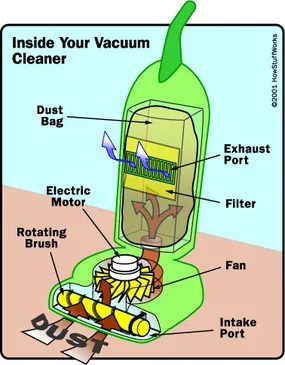
A standard upright vacuum looks like a lot of plastic and wires. Underneath, it is remarkably basic. Most conventional models rely on just six essential components to function.
If any one of these fails, the suction stops. The dust stays put.
- Intake Port – This is where the magic starts. It is the opening that connects to your cleaning head or hose. It often includes various attachments for different surfaces.
- Exhaust Port – Air must exit somewhere. This port releases the air back into your room after it has passed through the filtration system.
- Electric Motor – This provides the power. It spins the fan at high speeds. Without it, there is no movement of air.
- Fan – The fan blades push air out through the exhaust port. This action creates the low-pressure zone inside the vacuum body.
- Porous Bag – This traps the debris. The bag allows air to pass through but stops dirt. Some modern systems use cyclonic technology instead, but the bag remains a staple for many homeowners.
- Housing – This shell contains everything. It directs the airflow correctly and protects the internal components.
From Bellows to Central Systems
This technology isn’t new. Humans have been manipulating air pressure for centuries.
The earliest versions were hand-operated bellows. They appeared in the mid-1800s. They were heavy. They required significant physical effort. Then came the electric models in the early 1900s.
Electricity changed everything. It made cleaning less of a workout and more of a routine. Today, vacuum cleaners are a non-negotiable staple in household cleaning.
For those with larger homes, the story gets more interesting.
Central vacuum systems are gaining popularity. They work differently than your standard canister or upright model. The motorized fan is not in the unit you carry around. It is installed in a central location, often a garage or basement.
Pipes run through the walls of your house. You plug a hose into a wall inlet. The central fan creates suction through those interconnected pipes. It is convenient. It is quieter. And it keeps the heavy motor out of your living space.
Wet, Dry, and Heavy Duty
Sometimes standard suction isn’t enough.
Water spills. Construction debris. Sawdust. Wet leaves.
For these tasks, you need a wet/dry vacuum.
These units are versatile. They handle both liquid and solid debris. They look different, too. They usually feature a large bucket rather than a
Plug it in. Flip the switch. The motor wakes up.
Inside that plastic shell, an electric current spins the motor, which is locked directly to a fan. That fan isn’t just a disc; it’s a set of angled blades. Think of them like small airplane propellers. As they rotate, they throw air forward. Out the back. Through the exhaust port.
This isn’t magic. It’s basic fluid dynamics.
By forcing air forward, the fan creates a traffic jam of particles in front of it and leaves a void behind it. Density changes. Pressure shifts. Specifically, the air pressure behind the fan plummets.
It creates what engineers call a partial vacuum.
The Straw Effect and Ambient Pressure
Here is the trick. The pressure inside the vacuum cleaner drops below the ambient air pressure —the normal atmospheric pressure sitting on your floor right now.
Nature hates a vacuum. It hates it so much that it will push back.
The higher-pressure air outside rushes in to fill the low-pressure zone inside the machine. That rush of air enters through the intake port. You are literally feeling the atmosphere being sucked into your device. As long as the fan spins and the path stays clear, you have a constant stream of air moving from the room, through the dust bag or canister, and out the exhaust.
But air moving fast doesn’t just carry dust by accident. It captures it. And it does so through friction.
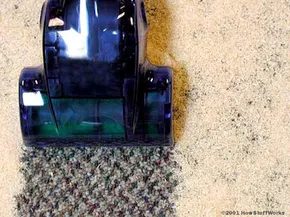
When that high-velocity stream hits your carpet, it scrapes against the fibers. The friction dislodges dirt. The airflow then lifts it up. The dust isn’t “sucked” in a mystical way; it’s caught by the momentum of the air stream.
Space mission technologies developed by Black and Decker led to the invention of the Dustbuster. Learn more about cool NASA innovations in this interactive animation from Discovery Channel.
Vacuum Cleaner Brushes and Bag
The air does the heavy lifting, but the brush roll does the agitation.
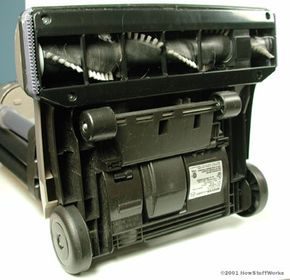
Most upright vacuums and many canister models feature a rotating brush bar. This isn’t just for show. It spins bristles against the carpet pile. Why? To loosen the dust that friction alone can’t reach. Deep-seated grit needs a mechanical nudge before the airflow can grab it.
Once the debris is loose, it travels up the hose.
The Collection System
Where does it go? Into the bag or the cyclone chamber.
If you use a bagged vacuum, the air passes through a porous fabric. The bag acts as a filter. Dirt gets trapped in the fibers. Air passes through. This is efficient but creates resistance. You lose suction over time as the bag fills up. You must replace the bag when the airflow chokes.
If you use a bagless vacuum, the air hits a cyclone. Centrifugal force spins the dirt out of the airstream and into a clear bin. You can see exactly how much junk you’ve collected. It’s satisfying. But the filters still clog. You have to empty the bin and clean the pre-motor filter regularly. Otherwise, the motor starves for air.
Maintenance Matters
A clogged filter is the silent killer of suction power.
Check your manufacturer’s instructions. Some filters are washable.
How Air Moves Debris Through the System
Think of the air inside your vacuum like water in a creek. The rotating fan creates suction, pulling a steady flow of air through the intake and out the exhaust. Those moving air particles don’t just glide past dust; they rub against it. If the debris is light and the suction is strong, that friction drags the dirt along with the current. It’s the same physics that sends leaves tumbling down a river.
Some models add rotating brushes at the intake to beat dirt loose from carpet fibers, ensuring the air stream has something to grab. Without that agitation, heavier particles might just sit there, waiting for a stronger breeze.
The Bag as an Air Filter
Once the dirt-laden air reaches the exhaust, it hits the vacuum-cleaner bag. These bags are made of porous woven material, usually cloth or paper. The design is simple but effective. The tiny holes in the fabric are big enough for air molecules to slip through, but too small for most dust particles.
So, when the current hits the bag, the air passes right through. The dirt gets trapped.
The bag acts as an air filter, collecting debris while letting air pass.
This separation is why you empty the bag regularly. A clogged bag restricts airflow, reducing suction. It’s a simple mechanical process, but one that fails if ignored.
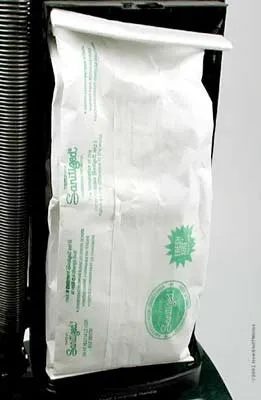
It doesn’t actually matter where you slot the bag into the system. As long as the air has to push through it, the location is flexible.
Think of the airflow like a river. It needs to cross the barrier. If it bypasses the bag, you’re just moving dust around.
In upright models, the bag is usually the final checkpoint. The air gets sucked in, hits the bag, filters out the debris, and then shoots back out the exhaust port. That’s it. Simple loop.
Canister vacuums are different. The bag often sits before the fan. Air enters the hose, hits the bag immediately, and only then does the motor pull it further. This means the air is cleaned the second it touches the machine. Some people prefer this. They say it protects the motor from fine dust.
Designers use these variations to tweak suction capacity. The physics are basic. The engineering is where the money is.
Next up, we break down what actually determines suction power.
Shopping for a vacuum cleaner?
Read vacuum cleaner reviews and compare prices at Consumer Guide Products before you buy.
Vacuum Cleaner Variables
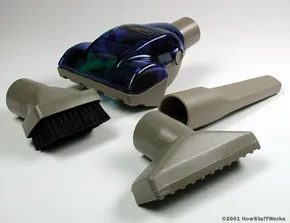
Why Your Suction Drops as the Bag Fills
The physics of suction isn’t just about a powerful motor; it’s about managing airflow resistance. When you start a fresh bag, the path is clear. Air moves freely. As the bag fills, debris clogs the porous material. Resistance spikes. Air particles slow down. The vacuum loses its bite. This is why a machine that felt like a hurricane five minutes ago now feels weak. The bag is the bottleneck.
But there is a clever trick embedded in the design, one that relies on fluid dynamics rather than brute force. Consider the nozzle.
The amount of air entering the vacuum per second remains constant, assuming the fan speed is steady. If you shrink the opening at the intake port, that same volume of air must squeeze through a tighter space. The air particles accelerate.
This is Bernoulli’s principle in action. Faster-moving air creates lower pressure. The drop in pressure at the narrow nozzle generates a stronger suction force. It’s not just about moving air; it’s about how that air behaves under constraint. This is precisely why narrow crevice tools outperform wide floor heads when picking up heavy debris like gravel or coarse sand. The velocity creates the force needed to lift denser particles.
It sounds simple. Drive air through a filter. Manage the pressure. That was the core invention a century ago. Since then, engineers have taken that basic concept and stretched it in every direction.
We’ve covered the two heavyweights: the upright, with its direct-drive brush roll, and the canister, which offers flexibility and reach. Both rely on a disposable bag to trap dirt inside a porous barrier. For decades, these have been the standard.
But they aren’t the only way to do it. The bag is just one solution to the problem of containment. Other systems have emerged, each with its own trade-offs in maintenance, power, and convenience.
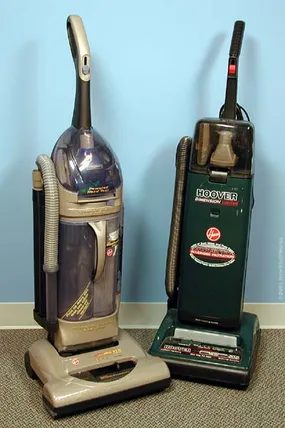
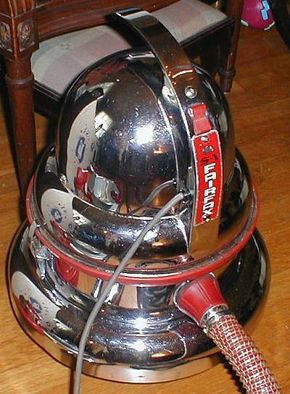
The history of suction is messy. We started with hand-operated bellows in the mid-1800s. They were awkward. They came in weird shapes. And they barely moved dust. Then came the electric models in the early 1900s. These were instant hits, though most families viewed them as luxury items for decades.
Today, one specific design is making a comeback. It is the central vacuum system. This approach treats your entire house as the cleaning tool. A motorized fan sits in the basement or outside the structure. It pulls air through a network of pipes embedded in your walls.
You don’t lug a heavy unit around rooms. You just turn on the motor and snap a hose into a wall outlet anywhere in the house. Dirt travels through the piping and lands in a large collection canister. You empty it only a few times a year. That is a massive shift from daily emptying routines.
For the nitty-gritty mechanics of how these systems operate, look into specific guides on how central vacuum systems work.
Wet/Dry Vacuums for Heavy-Duty Tasks
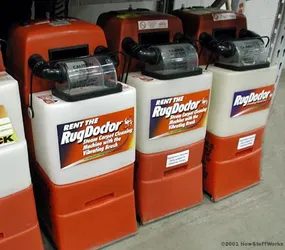
When the job gets messy, standard uprights won’t cut it. You need a wet/dry vacuum. These units handle both liquids and solids. This dual capability is essential for garage cleanups or basement floods.
Standard filters fail here. Paper or cloth filters dissolve when they hit water. They clog instantly. Wet/dry vacuums bypass this problem with a different collection method. They often use a bucket-style container. This allows you to dump water and debris without destroying the machine.
If you are planning a renovation, choosing the right suction tool matters. A central system is great for daily maintenance. A wet/dry unit is for the disaster scenarios. Know which one you need before you start digging.
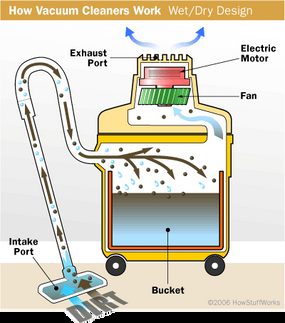
How Cyclonic Separation Works in DIY Vacuums
The design logic is straightforward. As air moves through the unit, it enters a chamber that is significantly wider than the intake hose. This chamber sits directly above a collection bucket.
Here is the physics of it. When air is forced through a narrow opening, it speeds up. Conversely, when that same volume of air hits a wider space, it decelerates. The sudden expansion causes the air current to lose velocity. This drop in speed breaks the aerodynamic grip the stream has on suspended particles.
Gravity takes over. Liquid droplets and heavier debris, no longer held aloft by fast-moving air, drop out of the stream. They fall straight down into the bucket below. There is no filter to clog in this initial stage. No bag to replace.
When the job is done, you lift the bucket. Dump out the contents. The heavy stuff is gone before it ever reaches the motor’s internal filtration system. It keeps the finer filters clean for longer.
Why does this matter for your shop vacuum? Because you spend less time cleaning filters. The heavy sludge and water are removed instantly. The fine dust stays for the secondary filter to catch. This separation extends the life of your HEPA or paper filters. It also maintains suction power. A clogged filter kills suction. A clear air path keeps the vacuum pulling hard.
“The sudden expansion causes the air current to lose velocity. Gravity takes over.”
This passive separation requires zero electricity. No moving parts. Just geometry and physics. You can build this into a simple canister. A wide pipe section connected to a bucket works. The key is the transition point. The air must have room to slow down. If the chamber is too small, the air stays fast. The dirt stays in the air. It gets blown out the exhaust or into the motor.
For the DIYer, this means sizing matters. Measure the airflow. Match the chamber volume to the vacuum’s CFM rating. Oversizing the bucket helps, but the wide section is the critical component. It’s the deceleration zone. Without it, you’re just moving dirt from one place to another. With it, you’re separating the waste.
Dumping the bucket is the only maintenance step here. Empty it. Wipe it out if it’s wet. Reattach it. The heavy lifting is done. The fine dust waits for the next filter.
How Cyclone Technology Changed the Game
You don’t need a bag. That’s the big shift.
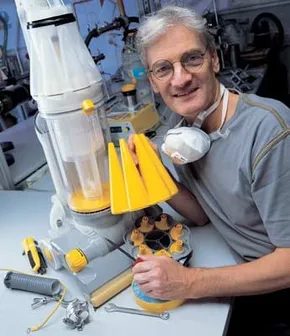
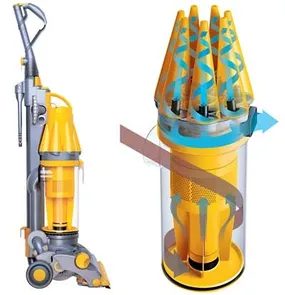
James Dyson introduced this concept in the 1980s, and it stuck. Instead of clogging a porous sack, the cyclone vacuum uses physics to separate debris. The machine channels air through one or more cylinders. The air doesn’t just move straight through. It enters a high-speed spiral path.
Think about a clothes dryer. Or a roller coaster loop. Or a merry-go-round spinning fast.
The air behaves similarly. It whips around the curve. Dirt particles inside that stream feel a powerful centrifugal force. They get thrown outward. Away from the clean air current.
No filter gets in the way. No bag fills up. The dirt simply hits the side of the cylinder and slides down. It collects at the bottom. You empty the bin. You’re done.
This design solves the suction drop problem inherent in bagged models. As bags fill, airflow chokes. Cyclones maintain consistent performance until you hit the “empty” mark.
But maintaining that cyclone efficiency matters.
Debris can pack against the walls if you wait too long. A quick tap on the bin’s release latch dislodges the cake of dust. It falls into the collection chamber. You dump it. Wipe the clear bin with a microfiber cloth. Check the pre-motor filter if your model has one. These are washable. Let them dry completely before reinstalling.
If you skip this, you might notice the cyclones spinning slower. Suction drops. The motor strains.
Modern versions often include multiple cyclones. Two. Three. Even six in high-end models. More chambers mean more separation stages. The fine dust gets caught in the innermost rings. Larger debris stays in the outer ones.
This multi-cyclone approach keeps the airflow smooth for longer periods. You clean more square footage before the maintenance step.
The Rise of the Robotic Vacuum
Then there’s the robot.
It started as a novelty. A square box that bumped into walls for an hour. Today, it’s a legitimate cleaning tool for many households.
These devices use sensors to map your floor plan. Laser-guided LiDAR creates a precise digital map. Some use cameras. Others rely on infrared beacons. The goal is navigation. Without getting stuck under the sofa. Without falling down the stairs.
You don’t push them. You schedule them.
Set a time on the app. The robot wakes up. It checks its battery level. It heads to the living room. It follows a systematic pattern. Often a back-and-forth grid. Or a spiral from the center outward.
Battery life varies. Most cover 100 to 150 square meters on a single charge. When the power dips, the robot doesn’t just stop. It finds its way back to the dock. It recharges. Then it resumes. Where it left off.
This is huge for pet owners. Hair accumulates fast. Daily maintenance keeps the deep cleaning cycles manageable.
But robots have limits. They’re light. They lack the suction power of a heavy upright. Thick carpets often defeat them. High-pile rugs can trap the wheels.
You still need the big gun for deep cleans. The robot handles the daily surface dirt
The Future of Suction and Smart Cleaning
The cyclone design isn’t just a tweak. It’s a fundamental shift away from the bagged era. No more hunting for replacements. No more gradual loss of power as the dust bin fills. The suction stays strong, regardless of how much debris you’ve already pulled from the rug.
Then came the robots.
For decades, human effort was the missing variable. You had to push. You had to steer. You had to remember the under-the-couch spots. Robotic vacuums changed the math. They don’t need you to guide them. Motors, sensors, and navigation algorithms do the heavy lifting. They map the room. They avoid the chair legs. They find the dirt while you’re at work.
If you want to understand the logic behind the navigation, look into how these machines map their environment. But the core principle remains simple. Air moves. Dirt follows. It’s physics, not magic.
New suction mechanisms will keep arriving. Collection systems will get smarter. But the basic idea—using a moving air stream to lift debris—is here to stay. It works. It’s efficient. It’s unlikely to be replaced anytime soon.
Central System Maintenance for Peak Performance
If you have a built-in central vacuum, it’s not “install and forget.” Efficiency drops if you ignore the basics.
What maintenance does a central vacuum system require to ensure efficiency?
You need to clean the filter and canister periodically. Dust cakes on filters restrict airflow. Restricting airflow kills suction. Check the pipes too. Clogs or blockages in the tubing will stop the vacuum from working at all. A quick visual inspection of accessible ports can save you a service call.
Disposing of Wet/Dry Vacuum Debris Safely
Wet/dry vacuums handle messes other machines can’t touch. But they also create disposal headaches.
How should one dispose of or recycle debris that a wet/dry vacuum collects?
Don’t just dump it anywhere. Follow local waste management regulations. This is non-negotiable.
If you’ve vacuumed up recyclables—glass, metal, hard plastics—separate them from the rest. Put them in the appropriate bin. If you’ve sucked up liquids, you need to handle them in a way that prevents environmental contamination. Pouring oil or chemicals down the drain is a bad idea. It clogs sewage systems and hurts the water supply. Check with your local hazardous waste facility for proper disposal of fluids.
Why This Matters for Your Home
You might think vacuuming is just about cleanliness. It’s about air quality too. Trapped dust and allergens stay in the filter until you empty it. If you’re doing this yourself, you’re in control of the maintenance schedule.
You can swap filters before they choke. You can empty cans before they overflow. You can choose the right tool for the job.
The technology has moved on. From bags to cyclones. From push-behinds to autonomous bots. The goal hasn’t changed. Pick up the dirt. Keep the air clean. Do it efficiently.
What happens when the next big innovation arrives? We’ll see. For now, keep your filters clean. Empty the bin. And let the machine do the work.