Forget the soot. Forget the ash in the hearth. Imagine slipping into your favorite loungewear, settling into a chair, and enjoying the glow of a fire without ever lifting a log. This isn’t a fantasy. It’s the reality of an electric fireplace.
These units are essentially heaters that mimic the visual and thermal experience of traditional wood, coal, or gas fires. The trade-off is simple: you lose the crackle of real wood, but you gain safety, ease, and zero maintenance. Once installed, you just plug the unit into a standard outlet. No chimney. No gas line. No professional installer required.
This freedom means you aren’t tied to a specific wall or floor plan. You can place a standalone model in a living room or tuck a compact unit into a bathroom nook.
“Electric fireplaces are certainly rising in popularity due to their combination of convenience and modern features,” says Glenn Sebring, founder of Chicago-based Sebring Design Build. “By simply flipping a switch, a room can be heated in minutes. They are popular not just because they heat the room so easily, but because they provide a sense of ambience as well.”
Зміст
How Electric Fireplaces Work
Understanding the mechanics helps you choose the right electric fireplace for your space. There are three main configurations available to DIYers:
- Standalone models: These come with their own mantel and heating element. They sit on the floor like a piece of furniture.
- Custom wall units: These can be mounted directly onto a wall or built into existing furniture.
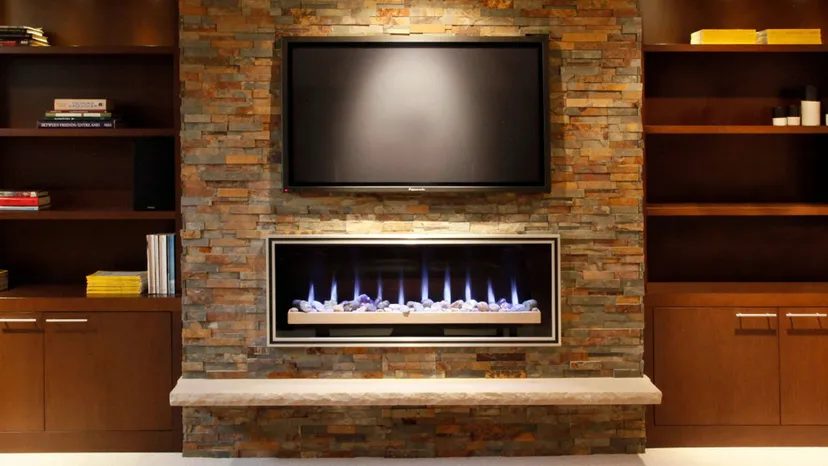
- Inserts: Designed to fit inside an old, non-functional hearth. They often include LED logs and adjustable flame effects.
Inside the housing, metal coils generate heat. A blower motor then pushes that warm air into the room. Some advanced units use infrared technology to heat objects and people directly, rather than just warming the air.
The visual effect—the flickering flames—is created differently. An LED bulb shines light onto a refractor, a textured panel that scatters the light to create a realistic, dancing flame pattern. Some models even include audio modules that play recorded crackling sounds to enhance the illusion.
Heating Power and Efficiency
You need to manage your expectations regarding heat output. If you are looking to replace your central heating system, an electric fireplace won’t cut it. It is a zone heater.
However, for warming a specific area, they are highly effective. Most units produce an average of 4,000 BTUs. This is sufficient to comfortably heat a room of about 400 square feet (37 square meters). Because they are plug-in appliances, you can move them to where you need heat the most, saving energy by not heating empty rooms.
There is a significant efficiency advantage here. Traditional fireplaces lose roughly 50 percent of their heat up the chimney or through the flue. An electric fireplace contains 100 percent of its heat within the room. Every watt of electricity consumed goes toward warming your space.
Installation and Safety Basics
Because these units don’t require venting, the installation barrier is low. But “low” doesn’t mean “ignore it.” You are dealing with high-voltage electricity and heating elements.
Before you even unbox the unit, check your outlet. Ensure the circuit can handle the load. Most electric fireplaces draw significant power when the heater is on full blast. If the unit has a dedicated plug, it should fit securely into a grounded outlet. Never use an extension cord unless the manufacturer explicitly approves it. Long cords can overheat, creating a fire hazard.
Keep the area around the unit clear. Electric fireplaces get hot. While they have safety shut-offs that turn the unit off if it tips over or overheats, keeping flammable materials like curtains, furniture, or rugs away from the intake and exhaust vents is non-negotiable.
The lack of a chimney also means no creosote buildup. You don’t need to sweep a flue. You don’t need to test for carbon monoxide leaks. The primary safety concern is electrical and
The Real Cost of Running an Electric Fireplace
You aren’t burning cash when you flip the switch. That’s the first thing to understand about low operating costs for electric fireplaces. Since there is no wood to stack and no gas line to meter, the math is straightforward. Most units draw about 1,500 watts to heat a room. At typical utility rates, that runs you roughly 8 or 9 cents per hour.
If you just want the visual effect? The flame-only mode sips power. It costs between 0.003 and 3 cents per hour. Over a full year, the average bill lands between $50 and $100. The range depends entirely on whether you are using it as ambient lighting or a primary heat source. And forget about annual chimney sweeps. You never need a professional inspection or cleaning. The maintenance burden drops to zero.
Installation Without the Hassle
You can put an electric fireplace almost anywhere. The only hard requirement is access to an outlet. Most standard models plug into a standard 120-volt household outlet. You don’t need a gas line. You don’t need a vent. You don’t need masonry work.
Larger, more powerful units might require a 240-volt outlet, similar to what an electric dryer uses. But for the majority of homeowners, the installation is plug-and-play. You move a box into a corner or into a custom mantle niche. You plug it in. You’re done. It is the easiest home renovation upgrade you will likely ever do.
Zero Mess, Zero Ash
Real fire leaves debris. Charcoal. Ash. Soot. Electric fireplaces do not. As Glenn Wiseman, sales manager at Top Hat Home Comfort Services, points out, the flames are an illusion created by light components. There is no combustion. There is no burn.
The result is a clean on/off switch. You get instant heat. You get the flickering visual. You get none of the cleanup. No sweeping. No scraping the grate. No smelling like smoke on your clothes days later. It is a clean burn that doesn’t exist.
Safety and Air Quality
This is where the difference becomes critical for health. Electric units produce zero emissions. No carbon monoxide. No carbon dioxide. No particulate matter.
Wood-burning fireplaces release hazardous byproducts. They emit cancer-causing agents and dangerous fumes into the room. Inhaling these is risky for you and your pets. Electric fireplaces eliminate that inhalation risk entirely.
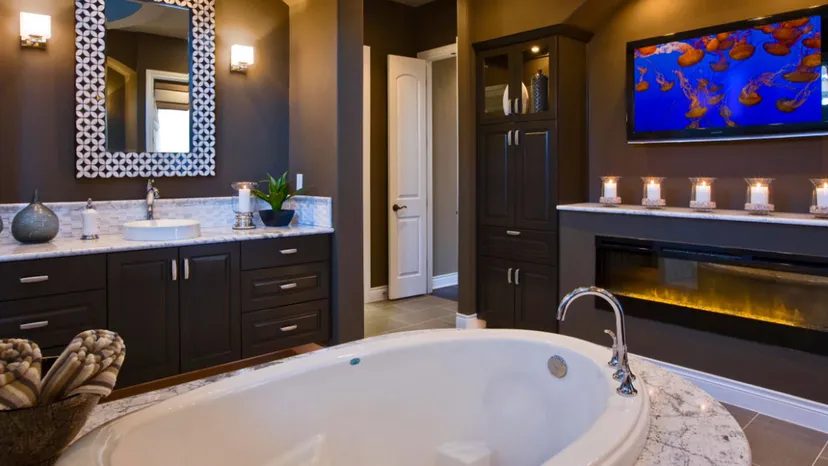
They are also safe enough for bathrooms. You can install one in a steam-filled room, provided it is specifically rated for wet or damp locations. Check the label. If it says it is bathroom-safe, you can install it. If not, keep it in the living room.
You can tuck an electric fireplace into places a real fire simply cannot go. Apartments. Condos. Small homes. Even RVs. You can build them into bookshelves or mount them in entertainment centers. The flexibility is the main draw.
“If there’s one thing an electric fireplace can bring opposed to a traditional wood-burning or gas fireplace, it is its modern look,” Wiseman says. “Any traditional wood-burning or gas fireplace will bring out a luxurious feel to your home as well, but an electric one will modernize it.”
That modern aesthetic is why so many homeowners choose customizing an electric fireplace to fit their specific decor. It’s not just about heat. It’s about the vibe.
Tweaking the Visuals
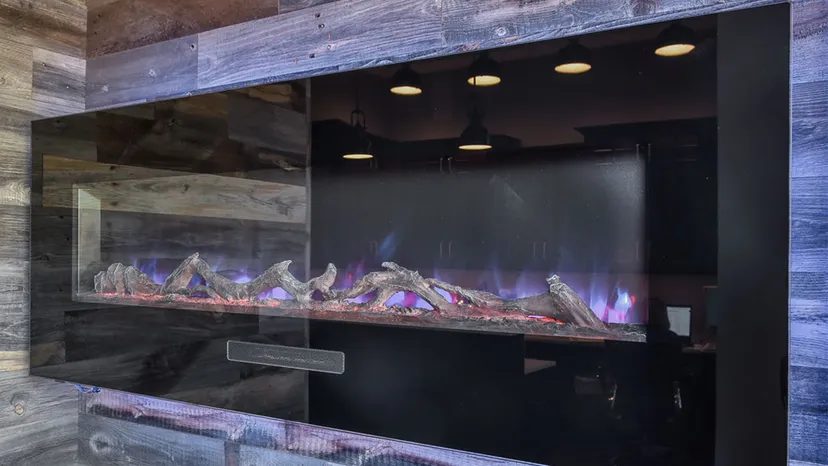
The default look is fine. But why stop there? You can swap out components to change the entire feel of the unit. Log sets are the biggest variable. Instead of standard ceramic logs, you can install burnt driftwood. It mimics the texture of real wood without the ash.
There are also rock options. Black rocks that look like coal. Natural river stones. White stones that look heated under the flame. Each changes the color temperature of the room.
Then there is the light. You can change the LED flame color to match your mood or your interior design scheme. Orange is classic. Red is warm. Pink adds a touch of neon retro. Blue? Cool and stark. Some models even let you dim the intensity so the glow doesn’t overpower the room.
Custom accessories allow you to modify the look, including different log installments and LED light sets to modify the color of the flames.
A Brief History of Fake Fire
It’s easy to forget that this technology isn’t new. Electric fireplaces were used as early as 1912. Not in homes. In theaters. American playhouses used them to heat and light stages. Safe. Controllable. No smoke.
They didn’t become common in residential spaces until the midcentury modern craze of the 1950s and ’60s. That’s when the sleek, minimalist look took off. Realistic-looking flame effects? Those didn’t arrive until the ’80s and ’90s. Earlier models were just glowing coils or simple bulbs. Now, you can get high-definition logs that cast shadows.
DIY Considerations
If you’re planning to install one yourself, keep a few things in mind. Most units plug into a standard 110-volt outlet. No special wiring needed. But check the weight. Some built-ins are heavy. Make sure your wall studs or furniture supports can handle the load.
Safety is usually baked in. Most modern units have overheat protection. They shut off if they get too hot. Still, keep flammable materials away. You’re not dealing with live embers, but the unit gets warm.
Which Option Fits Your Space?
Do you want the cozy chaos of a real fire? Or the clean lines of a modern appliance? The answer depends on your lifestyle. If you rent, electric is your only real option. If you have kids or pets, the cool-to-touch glass and lack of open flame is a huge plus.
But it’s the customization that keeps people coming back. Swap the logs. Change the light.