We all know the story. It was the early 2000s. You and your college crew are crashing at a friend’s apartment after a party that went on too long. The mattresses are gone. The couch is taken. There is only one option left: the papasan.
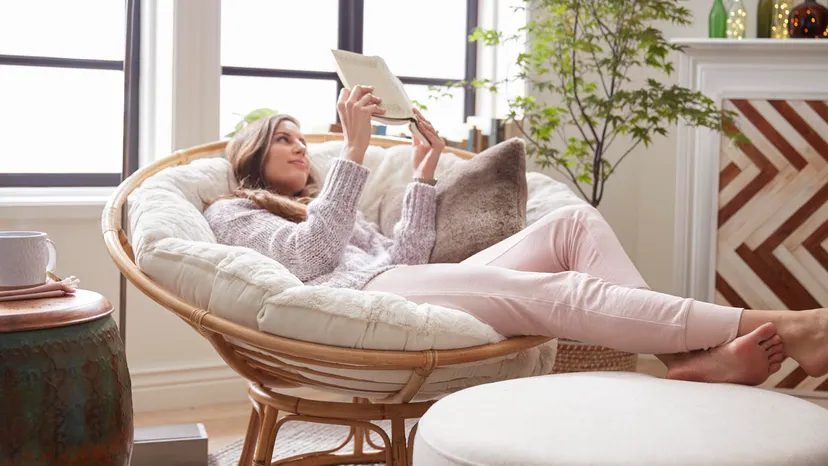
If you’re under 40, you might not immediately picture it. But you know the shape. A large, bowl-like frame holding a massive round cushion. It screams 1970s. It feels like a specific kind of nostalgia, even if that nostalgia involves waking up with a stiff neck in a fetal position.
I decided to dig into why this furniture staple exists. My informal survey of friends yielded predictable results. Some love the quirky aesthetic. Others hate the precarious feeling of being trapped in a giant bowl. More than a few admit to spending eight hours contorted into an uncomfortable shape.
But where did it come from? Why do we call it a “papasan”? And can you actually use one in your home today without it looking dated?
Зміст
The Origins of the Bowl Chair
The chair has many names. People call it a bucket chair, saucer chair, moon chair, or bowl chair. The name “papasan” itself is a mystery wrapped in an etymological enigma.
According to researcher John Kelly, the earliest known use of the word “papasan” appeared in a 1974 advertisement in the Philippines. But the word didn’t originate there. It’s a compound of the English word “papa” and the Japanese honorific “-san,” literally meaning “father” or male elder.
“Legend has it that U.S. military men first brought the papasan chair to the states as a gift for their wives.”
So why the weird name? Interior designer Sarah Barnard suggests U.S. soldiers brought the chairs home from Asia-Pacific regions as gifts. They fit into an eclectic “military chic” style, paired with other souvenirs from travel.
Kelly’s research offers a darker, more controversial theory. During that era, “papasan” was sometimes used as slang for “pimp.” Soldiers may have encountered the chairs in red-light districts during the Vietnam War. They associated the circular, womb-like seating with sex culture. It’s a stretch, perhaps. But there’s little else to explain the terminology.
The chair itself predates its name. It is a product of Asian-Pacific culture. Early versions were likely simpler. Smaller. Uncushioned. Propped up on legs rather than suspended in a large frame.
Pier 1 Imports and the 70s Boom
How did the papasan become a ubiquitous American icon? You can largely thank Pier 1 Imports.
The company claims to have started selling the chairs in the early 1960s. They sold them alongside beanbag chairs, love beads, and incense. The counterculture movement was in full swing. The papasan fit right in.
John Kelly argues the popularity truly exploded in the 1970s. The connection is so strong that typing “papasan.com” into a browser redirects you directly to the Pier 1 page for the chair. It’s a digital echo of the brand’s dominance in the category.
The design wasn’t just about style. It was about the materials. Rattan. Wicker. Wood. These were natural, lightweight materials. They could be moved easily. They invited a casual, youthful spirit that defined the era.
Is the Papasan Still Relevant?
The original papasan shape has evolved. It’s not just a giant bowl with a fat cushion anymore.
Lindsey Shook, editorial and brand director at California Home + Design Magazine, notes the transformation. The modern version is often smaller. The rattan frame might remain, but the tufted cushion is gone. Or it’s changed.
Brands like Bend Goods and Baxter are experimenting. They use metal finishes. They add cords. They install smaller pillows. They tweak the shape to fit contemporary interiors.
The cushion itself is what often makes the original look dated. Remove that, and you have a sculptural piece. Add a colorful toss blanket, and you have a fresh face for a vintage chair.
“The rattan material and womb-like shape of papasan chairs invites daydreams of an island vacation and can inspire impromptu naps.”
Today, saucer-shaped chairs are regaining popularity among boho-chic enthusiasts. The reinvented papasan is modern. Earthy. It calls to comfort. It retains that casual, youthful spirit, even if the aesthetic has shifted.
Where to Place Your Papasan Chair
If you are buying a papasan chair for your home, location matters. Barnard suggests the best placement is outdoors. Or in an indoor/outdoor space.
It works perfectly for stargazing. It helps us enjoy the restorative qualities of rest. It connects you to nature. The lightweight frame means you can move it around as needed. You can replace cushions on a whim. You can restyle it without major effort.
Papasan Chairs FAQ
What exactly is a Papasan chair?
It is a bowl-shaped, cushioned chair with strong 1970s roots. Most are made from rattan, wicker, or wood frames. They feature large, unique pillows that cradle the sitter. They are lightweight and ideal for indoor or outdoor spaces.
Where did the Papasan chair originate?
The chair has roots in Asian-Pacific culture. It became popular in the West when U.S. military personnel brought them back from South Asia after the Vietnam War as gifts for their wives.
Are double Papasan chairs comfortable?
Yes. While standard versions are made of wicker, rattan, or wood with a single large cushion, larger “double” versions exist. These are designed to comfortably fit two people, making them popular for couples or cozy reading nooks.