


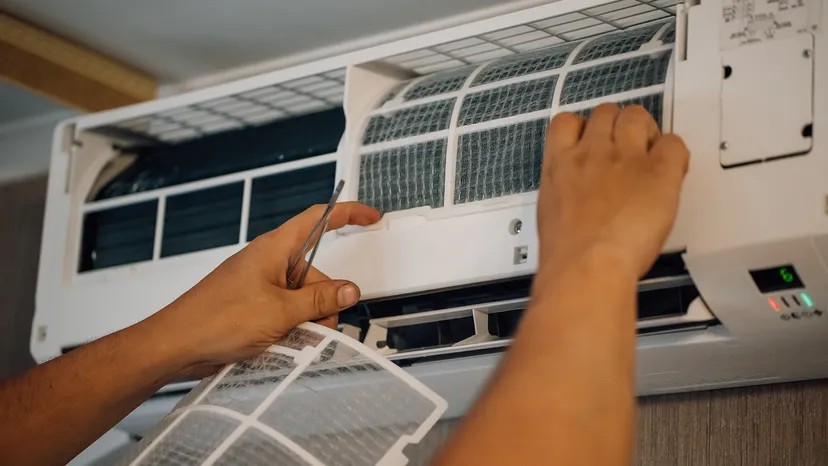
You’ve seen the acronym on the side of a service van. It looks technical. Maybe a little intimidating. You wonder what HVAC actually means. It stands for Heating, Ventilation, and Air Conditioning. It’s not just a fancy term for “the thing that makes the room warm.” It is the entire ecosystem managing the air you breathe and the temperature you feel. Most homeowners treat it like a black box. Turn the dial. Hope for the best. That’s a bad strategy. Understanding the guts of the system helps you spot trouble before it costs you hundreds in emergency repairs.
Зміст
What does HVAC stand for and why does it matter?
HVAC covers three distinct jobs. They work together, but they do different things.
Heating raises the temperature. Usually via a furnace or boiler. Furnaces heat air. Boilers heat water. The warmth moves through ducts or radiators.
Ventilation moves the air. This is the part everyone ignores. It’s about swapping stale indoor air for fresh outdoor air. It pulls out moisture, cooking smells, dust, and carbon dioxide. You can do this mechanically with fans or passively by opening a window. But in modern tight homes, mechanical ventilation is often necessary to keep the air quality decent.
Air Conditioning removes heat. It doesn’t add “cold.” Cold is just the absence of heat. The AC unit pulls heat and humidity from inside and dumps it outside. It uses refrigerant coils to make this happen.
How heating and cooling actually move energy
Here is the core mechanic. Heat moves from warm to cool. Always. Your systems just manipulate that flow.
A furnace burns fuel. Gas, oil, or electricity. It creates heat. That heat goes into the air. The air goes into the ducts. The ducts go into the rooms. Simple.
An air conditioner does the reverse. It uses electricity to run a compressor. This cools a gas into a liquid inside a coil. Warm air blows over that cold coil. The heat leaves the air. The air gets cold. The heat gets moved outside.
Most homes share the same distribution network for both. The ducts that carry warm air in January carry cool air in July. The thermostat controls both. It’s one system, two modes.
The difference between a heat pump and a furnace
This is where people get confused. Which should you get?
A traditional furnace generates heat. It burns stuff.
A heat pump moves heat. It doesn’t create it. In summer, it works exactly like an AC unit. It pulls heat from inside and pushes it outside. In winter, it reverses the cycle. It pulls heat from the outside air—even when it’s freezing—and pushes it inside.
Heat pumps run on electricity. They are efficient because moving heat takes less energy than creating it. But they struggle in extreme cold compared to a gas furnace. If you live somewhere that drops below 20°F regularly, a heat pump alone might not cut it. You might need a hybrid system.
Distribution: Getting the air where it needs to go
The source is only half the battle. The distribution gets the temperature to your living room.
For forced air systems, you have ductwork. Flexible metal or plastic tubes running through walls and ceilings. Registers on the floor or wall blow the air out.
For hydronic systems, you have pipes. A boiler heats water. That water travels through pipes to radiators or baseboard heaters. The metal heats up. The room heats up. No fans. No noise. Just radiant warmth.
Older homes often have a mix. You might have radiators in the bedroom and a ducted vent in the hallway.
Knowing which system you have changes how you maintain it. Filters matter for forced air. Bleeding air from radiators matters for hydronic systems. You can’t fix what you don’t understand.

How forced-air systems move temperature through ducts
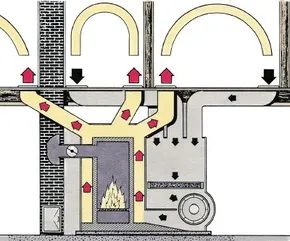
Once your furnace or AC unit gets the air to the right temperature, it has to move. It doesn’t just sit there. You need a distribution method. Most homes rely on forced-air systems.
Here is how they work. An electric fan, called a blower, pushes the heated or cooled air into a network of metal ducts. These ducts run to every room. It is mechanical. It is direct.
The return path matters just as much. As warm air fills a room, the colder air inside gets displaced. It flows down through a separate set of ducts—the cold-air return system —back to the furnace. The cycle repeats. Central air conditioners use this exact same setup. The blower pushes cold air out, pulls warm air back in.
You can control it. Crank up the fan for faster distribution. Dial it back to save on electricity. But there is a cost. The blower needs power. That adds to your fuel bill. And if the motor goes bad, you have a problem. Blowers can get loud. They are the most common point of failure in these systems.
Still, it is effective. Nothing else channels airborne comfort as quickly.
Why gravity systems fail at cooling
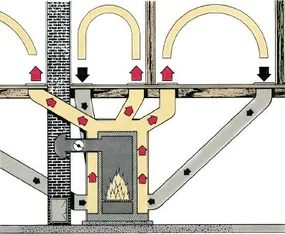
Gravity systems are older. They rely on physics, not fans. Hot air rises. Cold air sinks. That is the entire operating principle.
Because of this, gravity systems cannot distribute cool air. An air conditioner needs force to push cold air around. Gravity does the opposite. It lets cold air drop. So if you want cooling, forget gravity.
In a gravity heat setup, placement is everything. The furnace usually sits near or below the floor level. Warm air rises naturally. It flows up through ducts to registers in the floorboards.
If your furnace is on the main floor, the registers go high. They must be higher than the heat source. Otherwise, the air won’t rise into them. The warm air hits the ceiling, cools down, and sinks. It drops back into return ducts. It flows back to the furnace to be reheated.
No blower noise. No electricity for fans. Just heat rising and falling. Simple. But limited.

How radiant heat actually works in your home
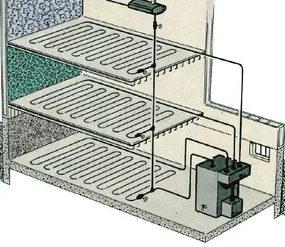
Forget the blowy air of forced systems. Radiant heating is quiet. It’s slower, sure, but it feels different. The heat source is almost always hot water. Your furnace boils it up, then sends it through pipes buried in your walls, floors, or ceilings.
The goal isn’t to heat the air directly. It’s to heat the objects.
Walls get warm. Floors get warm. Radiators get warm. Then, those solid surfaces radiate that heat into the room. The air warms up as a secondary effect. It feels more natural. Less dry.
Electric vs. hot water radiant panels
Not all radiant systems use water. Some rely on electricity.
Electric heating panels generate heat and radiate it straight into the room. You’ll see these in warm climates mostly. Or in places where the power bill doesn’t scare you. If electricity is cheap, sure, go for it. But there’s a hard limit here.
Radiant systems don’t cool. You can’t run cold water through a radiator to beat the summer heat. It just doesn’t work. If you want air conditioning, you need a ducted system or a separate unit.
Why older homes love hydronic radiators
Look at an old house. Chances are, you’ll find radiators or convectors in the rooms. These are the workhorses of hot water heating.
They connect to a boiler. The water travels from the boiler to the radiator. But how does it move?
Two ways.
- Gravity. The old-school method. Hot water rises naturally. It’s slow. It’s passive.
- A pump. Modern systems usually use a circulator pump to push the water around.
If your system uses a pump, you’re looking at what’s called a hydronic system. It’s the standard for reliable, steady heat in older builds. The pump makes sure the water moves, even if gravity isn’t doing the heavy lifting.
Which setup does your house have? Check the basement. Look for the pump. If it’s humming, you’re hydronic. If it’s silent and relies on slope, you’re running on gravity.

How Your Thermostat Actually Works
The slab warms up. Slowly. It doesn’t need to be hot to the touch, just warm enough to radiate heat into the room. Modern systems use circulator pumps to keep water moving, which solves the gravity-fed clogging issues of older setups. But the real brain of the operation? The thermostat.
Most homeowners treat thermostats like black boxes. You set a number, it beeps, the furnace kicks on. But understanding the mechanics helps you troubleshoot when things go sideways.
What is inside a mechanical thermostat
At its core, the device is a heat-sensitive switch. It monitors the air temperature right where it sits. If the air drops below your set point, it triggers the furnace or AC.
Old-school models rely on a bimetallic element. This is two different metals bonded together. They expand and contract at different rates when temperatures change. This physical warping is what opens and closes the electrical circuit.
In older units with exposed contacts, the story is simple. Temperature drops, the strip bends, it hits the first contact, then the second. The system activates. Full steam ahead.
But there’s a trick. The anticipator.
When the second contact closes, the anticipator heats the bimetallic element. This pre-heating causes the strip to bend slightly, breaking that second contact early. The first contact stays closed, though. So the heater keeps running even after the “off” signal would technically trigger. This prevents the system from short-cycling, where it turns on and off too frequently. It smooths out the temperature swings.
Modern sealed thermostats and solid-state controls
Newer mechanical thermostats hide the mess. The bimetallic strip is coiled and sealed behind glass to keep dirt and dust from messing with the contacts.
Here is how the magnet trick works. As the room cools, the coiled element starts to uncoil. This movement separates a stationary steel bar from a magnet at the end of the coil. Gravity or spring tension lets the magnet drop. It gets close to the glass tube.
Magnetism does the rest. The magnet pulls up on a contact arm inside the tube. The contacts close. Circuit complete. Heat on.
When the room warms up, the coil rewinds. The magnetic hold breaks. The arm drops. The circuit breaks. The heater shuts off. The magnet snaps back up to the stationary bar, waiting for the next cold front.
Solid-state electronics have largely replaced these mechanical tricks. They use sensors and circuit boards instead of bending metal. They are more accurate. They respond faster. They don’t have moving parts to wear out or get stuck.
There is a catch, though. You can’t fix a broken circuit board with a screwdriver. If a solid-state control dies, you replace the whole unit. With the old mechanical ones, you could often clean the contacts or adjust the anticipator. Now, it’s trash and replace.
Which is better? Accuracy wins most of the time. But the ease of repair is gone.
So, check your thermostat placement. If it’s near a window or a heat source, it’s lying to you. The slab might be perfect, the boiler might be humming, but if the sensor is wrong, the house will never feel right.


