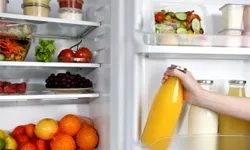
You already know the basic deal. Refrigeration can slow down the growth of bacteria. A freezer stops them dead. But you can’t pack everything in the freezer. The salad will be soggy. Strawberries are sad and watery. Milk and eggs? Not so much. Plus, thawing a half gallon of milk every time you want a bowl of cereal is a nightmare no one wants to solve.
In other words, the refrigerator has its own role. It should be cold enough to keep rot at bay, but warm enough to keep the product from turning into ice sculptures.
The scope is narrow. 35-38 degrees Fahrenheit (1.7-3.3 degrees Celsius). That’s the sweet spot.
Go higher. When the temperature exceeds 38 degrees, the bacteria start to wake up. Leftovers spoil faster. There is a risk of food poisoning. You end up with a trash can full of wilted vegetables and sour cream.
Go lower. When the temperature drops below 35 degrees, hit the blast chilling line. lettuce gets crunchy in a bad way. leafy greens turn into slush. If you accidentally freeze milk inside a milk in the carton, it can expand until it bursts.
It’s a tight margin. However, keeping it between 35-38 degrees will keep your food fresh and healthy.
If you want to better understand how these devices actually work, there are many ways to do it. Find out how air conditioners can cool your home. You can see how the ice maker pulls water out of thin air. You can see why the back of the fridge is painted black – usually to dissipate heat. You can also check if the refrigerator light turns off when you close the door.
There are several resources for those interested. The Food Safety Center has detailed information on blast chilling. There are instructions for handling ice in frost-free models. If you encounter any problems, you can find answers to frequently asked questions about repairing your device.
But now check the dial. Stay in your 30s. Your food will thank you.
Most people don’t think about it until something goes wrong. They set the knob, forget it, and wonder why the milk tastes weird. It is easy to ignore. But temperature is important.
Have you ever opened the fridge and felt so cold that your knuckles hurt? It might be too cold. Have you ever left your door open for too long and felt the warm air rush in? This is where bacteria thrive.
The difference between fresh and rotten is only a few degrees.