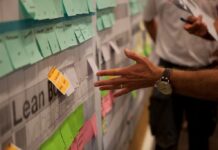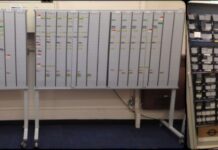
Many designers instinctively push back against fixed schedules, viewing them as stifling to creativity. However, a growing number are finding success with a collaborative approach called “pull planning,” derived from the Last Planner® System (LPS®), developed in the 1990s by Glenn Ballard and Greg Howell. This method doesn’t impose deadlines; it reveals realistic timelines through collective commitment.
Зміст
The Problem with Traditional Scheduling
Traditional project planning, like Critical Path Method (CPM) scheduling, often fails to accelerate design deliverables, even with increased resources. Designers frequently estimate inaccurately or resist time constraints, leading to delays. Clients, like any consumer, want predictable completion dates, but creative work rarely fits neatly into rigid timelines.
The core issue isn’t a lack of effort; it’s a disconnect between how work is planned and how it actually flows. Designers often cite that schedules “cheapen” their process, while contractors default to vague estimates like “about two weeks.” This disconnect undermines efficiency and trust.
How Pull Planning Works
LPS® is a “pull” framework, meaning work is initiated based on downstream needs rather than pushed from upstream tasks. It involves bringing all stakeholders—architects, engineers, owners—together to collaboratively define the sequence of tasks, dependencies, and realistic durations.
This is done through structured conversations guided by these questions:
- Should we do this? (Strategic alignment)
- Can we do this? (Resource availability)
- Will we do this? (Commitment)
- Did we do this? (Accountability)
- What was Learned? (Continuous improvement)
Case Study: A Hospital Project Gains Two Months
A recent example at a large hospital demonstrates the impact. After a 30-day COVID-related pause, the design team faced a cumulative two-month delay on a project scheduled to deliver patient care in under three years. Traditional methods failed to recover lost time.
Implementing LPS® in a small trial session with the design team revealed the key: clarifying what downstream teams needed to progress, rather than simply stating when deliverables would be ready. This led to submitting site permit drawings days earlier than the original CPM schedule.
Expanding the sessions to include the owner resulted in a nearly two-month acceleration of the civil design phase. The team shaved 44 workdays off the schedule, equating to $1.32 million in design cost savings at a blended $1,000/day rate.
The Role of the Last Planner®
The “Last Planner®” is the person directly responsible for assigning work and making resource decisions. In design, this is typically the project architect, discipline leader, or head engineer. In construction, it’s the superintendent, site manager, or foreman.
Effective implementation of LPS® requires a skilled facilitator to navigate team dynamics and uncover hidden constraints. The system thrives on transparency, accountability, and a shared commitment to deliver high-quality work on time.
Long-Term Results
The hospital project ultimately achieved a ten-month design schedule improvement, bringing the entire project timeline down from 36 to 26 months. The design team now actively incorporates LPS® into every session, continuously refining their workflow.
The key takeaway is not just faster delivery, but a fundamental shift in how design teams approach scheduling: from resistance to collaboration. By focusing on reliable commitments and continuous learning, LPS® transforms deadlines from constraints into opportunities for improvement.