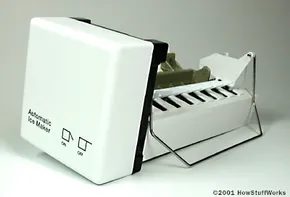
Before the early twentieth century, keeping things cold was a logistical headache. In warm climates, you didn’t just pop a tray into the freezer. You bought ice. Delivery services hauled heavy blocks from colder regions or industrial plants straight to your door. The cost was steep. If you lived in an equatorial zone, you might never see a single ice cube in your lifetime. It was a luxury reserved for the rich or the desperate.
Then came the refrigerator. Compact units made food preservation affordable and accessible. By the 1960s, automatic icemakers entered the scene. Today, Americans treat ice as background noise. We don’t think about it until the ice runs out at a party.
But what is actually happening inside that box?
The process of making ice is simple: freeze water. The process of making perfect ice cubes is surprisingly elaborate.
Зміст
The Evolution of Home Ice
Your icemaker is essentially a modernized version of a plastic ice tray. The logic remains unchanged. You add water. You wait. You get solid cubes. The difference lies in automation.
An ice tray requires manual labor. You pour. You wait. You twist. You pry. It is tedious.
A built-in icemaker removes the human element. It functions like a tiny assembly line. Water flows in. It freezes. The mechanism ejects the cubes. It repeats.
This shift from manual to automated changed how we store food. It changed how we drink. It changed how we host.
Inside the Machine
We are looking at two distinct worlds here. The home icemaker found in your fridge. The commercial units in hotels and grocery stores.
Both share a basic principle. Freezing water.
But the execution varies. Home units must be quiet. Compact. Energy-efficient. Commercial units prioritize speed. Volume. Durability.
Let’s start with the home unit. It is smaller. Quieter. But no less complex.
Why Do Home Icemakers Fail?
Before diving into the mechanics, consider the common failure points. Ice makers jam. They stop producing. They melt prematurely. Why?
- Water supply issues. Clogged filters. Kinked lines.
- Temperature fluctuations. A door left ajar. A faulty thermostat.
- Mechanical wear. The ejector arm breaks. The motor fails.
These aren’t just inconveniences. They are reminders that behind the simple cube lies a precise mechanical dance.
The Basic Process
The core task is phase change. Liquid to solid.
Water enters the mold. It is cold enough to freeze. The water sits there. It solidifies. Then, the magic happens. The ice must be released. Without this step, you have a solid block of ice trapped in a reservoir. Useless.
The ejector mechanism is key. It pushes the cubes out. They fall into a bin. You open the door. You scoop.
It seems simple. It is. But achieving consistent shape and size requires precision.
How Do Commercial Icemakers Differ?
Commercial units are built differently. They don’t have to fit under your counter. They don’t have to be silent.
They prioritize output. A hotel bar needs hundreds of cubes per hour. A grocery store
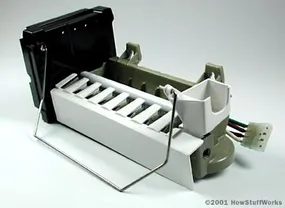
You can’t just plug an icemaker in and expect ice. Those shiny cubes are the result of some serious infrastructure work happening behind your freezer’s back panel. Most standard units rely on a trio of electric components to function: a motor that drives the mechanical cycle, an electrically operated water valve to let fresh water in, and a heating element designed to warm the mold just enough to release the finished cubes.
To keep all that machinery running, you need to tap into the refrigerator’s existing electrical circuit. At the same time, you have to connect it to your home’s plumbing line. This dual requirement means two distinct lines—the power cord and the water intake tube—must pass through a single hole in the back of the freezer compartment. It’s a tight squeeze. If either connection fails, you’re left with a noisy fridge and no ice.
The Mechanics of Ice Production
Once the hardware is connected, the real work begins. The icemaker doesn’t just make ice; it follows a strict, repetitive cycle. First, the valve opens. Water rushes into the mold. The motor spins. The heater warms the tray. Then, the cycle resets.
This process is automatic. You don’t need to intervene unless something breaks. But understanding the sequence helps when troubleshooting. If the ice comes out hollow, the water valve might be stuck open too long. If the cubes are fused together, the heating element might not be firing hot enough.
The icemaker is a self-contained factory. It handles water intake, freezing, harvesting, and ejection without human input.
The next step in understanding your appliance involves breaking down that exact cycle. We will look at how the icemaker moves from empty mold to full bin. It’s not magic. It’s just thermodynamics and timing working in sync.
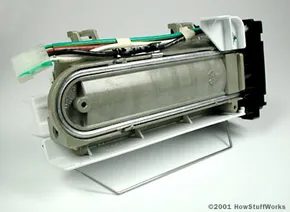
Once you have the plumbing and power sorted, the machine takes over. It is not magic. It is a loop of switches, cold air, and simple mechanics.
The Water Fill
The cycle starts with a timed electrical signal. Current hits the solenoid on the water valve. Most of the time, that valve sits in the back of your fridge, hidden behind the coils. Wires carry the charge forward. The solenoid acts as an electromagnet. It pulls open the valve.
Seven seconds. That is all you get.
Just enough water to fill the ice mold. It is a plastic tray with half-circle cavities. You will notice small notches between each cube. They stay connected until the end. This design matters. It keeps the ice moving as one unit rather than a chaotic pile of loose cubes.
Freezing and Ejection
The icemaker does not freeze the water itself. Your refrigerator’s cooling unit does that heavy lifting. The icemaker just watches.
Its built-in thermostat monitors the temperature in the mold. When the water hits about 9 degrees Fahrenheit, the thermostat closes a switch. This triggers the heating coil.
Yes, heat to remove ice.
The coil warms the bottom of the plastic mold. The slight thaw breaks the seal between the ice and the plastic. The cubes loosen.
Now the motor kicks in. It spins a gear. That gear turns a long plastic shaft. Attached to the shaft are ejector blades. As the shaft rotates, the blades scoop the connected sheet of ice up and out of the mold. They push it toward the front of the unit.
The Collection and Reset
At the front, the housing has matching plastic notches. The blades slide through them. The ice drops into the collection bin below.
But the cycle is not over until the reset.
A notched plastic cam at the base of the shaft catches the shut-off arm. It lifts the arm just before the cubes exit. Once the ice is gone, the arm falls. When it hits the bottom, it throws a switch. That switch reopens the water valve.
The cycle restarts.
Unless the bin is full.
If stacked ice cubes block the arm from reaching its lowest point, the switch never throws. The water valve stays closed. The machine stops. It waits for you to clear the bin.
It is a clever system for a kitchen. But it is not built for volume. A restaurant needs hundreds of pounds of ice an hour. Your fridge makes a few pounds a day. The next part looks at the heavy-duty machines that keep hotels and bars stocked.
You need three things to build a large, free-standing icemaker. A refrigeration system. A water supply. And a way to catch the ice once it forms.
One of the simplest setups uses a vertical metal ice-cube tray. Think of the coils on the back of your fridge. Those are heat-exchanging pipes. You know the drill if you’ve ever opened a fridge. A compressor pushes refrigerant fluid through a cycle. It condenses. Then it expands.
The compressor forces this fluid through a narrow tube called the condenser. Pressure rises. Temperature spikes. The refrigerant loses heat to the cooler air outside the system. It turns into a liquid.
Then comes the expansion valve. The fluid enters a wider tube. It expands into a gas. This evaporation pulls heat energy from the metal pipes and the surrounding air. The pipes get cold. So does the attached metal ice tray.
A water pump draws from a collection sump. It pours water over that chilled tray. The water freezes layer by layer. This slow freezing creates clear ice. Home icemakers freeze everything at once. You get cloudy cubes. Clear ice takes time.
After a set period, a solenoid valve triggers. It changes the refrigerant path. The compressor stops pushing heated gas into the condenser. Instead, it sends the gas into a wide bypass tube. The hot gas cycles back into the evaporator without condensing.
Heat rushes back into the evaporator pipes. The ice tray heats up rapidly. The ice loosens.
The cube cavities are slanted. Gravity takes over. The ice slides into a collection bin below. Some units use a cylinder piston to give the tray a shove. Just enough to knock the cubes loose.
This design is standard in restaurants and hotels. The cubes are uniform. But grocery stores and labs need ice flakes. They pack perishables better.
Flake Icemakers
Flake machines use the same basic principle. But they add one component: an ice crusher.
The coils sit inside a large metal cylinder. Water flows through the cylinder and around its outer edges. A column of ice builds up. It surrounds the cylinder from both inside and out.
Just like the cube maker, a solenoid valve releases hot gas. The ice column loosens. It falls into the crusher below.
The crusher breaks the cylinder into small pieces. These pass into a collection bin.
The size of the ice depends on the crusher mechanism. Some grind ice into fine flakes. Others produce larger, irregular chunks.
Variations exist. But the core idea never changes. Refrigeration builds the ice. A harvesting system ejects it. That’s all there is to the mechanics.
Icemaker FAQ
Do portable icemakers keep ice frozen?
They make ice. They don’t freeze it long-term. You must use the ice immediately or transfer it to a freezer. Otherwise, it melts.
Do portable icemakers need a water line?
No. Pour water into the reservoir. Turn it on.
What ice machine makes crushed ice?
Flake icemakers are the answer. They function like cube makers but include an ice crusher. A solenoid valve releases hot gas into the cooling pipes after a set time. The ice column loosens. It falls into the crusher. The machine breaks the cylinder into small pieces. It stores them in a bin.