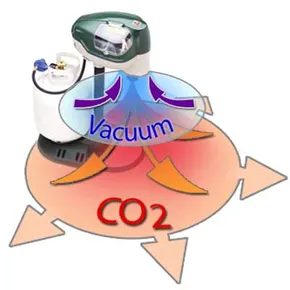
Mosquitoes are not just annoying pests. They are controlled by a very specific set of biological signals. If you want to capture them effectively, you need to speak their language. You have to build an artificial cow.
It’s ridiculous. It’s not.
Three specific components are required to implement this function. If you do these things right, you can attract almost any type of mosquito. If you miss even one, all you’re left with is lifeless air.
First, we need carbon dioxide. This is a long-range beacon. It tells them food is nearby.
Next you need heat and humidity. Cows are warm-blooded animals. they sweat. They breathe moist air. The trap should mimic that microclimate.
Third, you need the right plant chemicals. Cows don’t just exhale carbon dioxide. They release certain organic compounds through their skin and breath. Replicating this chemical profile is the key to sealing the deal.
Combine these three elements into one unit. Install an automatic suction device to suck up insects. Now you have an highly effective mosquito trap.
Some companies are already doing this. They call it a mosquito magnet. The engineering behind these commercial units is very clever. They automatically release all three attractants. They maintain the temperature. They filter the air.
But it helps to understand the mechanism. It demystifies the trap. It gives you a plan.
Зміст
The science behind suction
Most people buy and set traps. They don’t think about why it works. They don’t think about biology.
Mosquitoes hunt by sight, but their main sensor is smell. They can detect carbon dioxide up to hundreds of yards away. It’s a beacon.
Once they are close, they switch to heat and humidity detection. They sense the host’s body temperature through thick fur and clothing. They can also smell the lactic acid and ammonia in the sweat.
The concept of “artificial cow” is based on this hierarchy. You lead them in with CO2. You keep them close with heat and moisture. You land them with the specific chemical bouquet of a mammal.
Commercial machines use propane or butane to produce carbon dioxide. They heat the air to mimic body temperature. They release a synthetic attractants that mimics cow sweat and breathing.
The vacuum system then creates a negative pressure. It pulls the air—and the mosquitoes into the collection bag. The cycle repeats.
Why DIY Matters
There is no need to buy branded devices.
As long as you understand the three core components, you can build your version at home. It requires less money. This requires more patience.
The key is balancing the outputs. Too much carbon dioxide can attract bees and other insects. Too little and the mosquitoes won’t find the trap. The heat should be constant. Fluctuations in temperature can confuse insect sensors.
With these three you have everything you need to attract different types of mosquitoes.
This isn’t about killing mosquitoes for sport. This will reducing the population in your yard. Fewer mosquitoes means more time spent outside. It means sleeping with windows open.
The commercial versions are convenient. It’s expensive. They require specific refills.
Building your own traps gives you control. You can adjust the ratios. The lure can be changed. You can troubleshoot
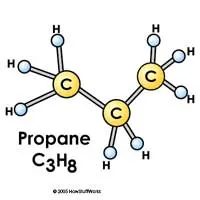

Mosquito repellent mechanism with catalytic combustion
You might think that the carbon dioxide in your mosquito trap is coming from dry ice or just a gas leak. This is not true. The source is propane.
Propane is a hydrocarbon. When burning with a flame, such as in a grill, heat, carbon dioxide and water vapor are produced. Normal stuff. However, modern gear does not use flames. They use chemistry.
These devices do not use an open flame, they use catalytic combustion. Its basic principle is the same as that of a car exhaust system catalyst. We don’t need chaotic energy like fire to transform fuels.
The role of the catalyst
Here’s how it works:
Propane gas enters the chamber. It hits the catalyst. This is more than just a filter. The catalyst is usually an array of ceramic beads or grids coated with platinum. Platinum is the key. The activation energy required for the reaction decreases.
The propane reacts with the oxygen on the surface of these beads. The results are converted immediately. Propane converts directly into heat, carbon dioxide and moisture.
There is no flame.
This is important for several reasons.
First, stability. Small amounts of propane can flow for long periods of time. The reaction stays consistent. Since there are no flames in the first place, the “flame” never goes out. This is a stable and predictable CO2 emission. Mosquitoes can detect this influx. They fly towards it. They get trapped.
Second, safety. Open flames near plastic parts or in outdoor traps are dangerous. Catalytic conversion completely eliminates the risk of fire. You don’t have to worry about your device falling over and the surrounding air catching fire.
The third is air quality. Traditional combustion produces by-products. Carbon monoxide is really dangerous indoors. If the flame gets too hot, nitrogen oxides are produced. Catalytic combustion minimizes these emissions. You get cleaner CO2. The operation is safer.
Why this method wins
Whether you build your own trap or opt for a commercial unit, catalytic methods have clear advantages.
- Consistency: A non-flickering flame means a stable CO2 emission.
- Safety: There are no open flames, which reduces the risk of burns and fires.
- Efficiency: Platinum catalysts work at lower temperatures and save propane.
- Cleanliness: Low harmful by-products such as CO and NOx.
No fire means less maintenance. No soot build-up. No burner clogging. A steady stream of gas simply impinges on the platinum-coated surface.
Mosquitoes rely on carbon dioxide to find hosts. They follow the slope. A steady, flameless source provides a reliable trail. It works day and night.
There are trade-offs. Platinum is expensive. Catalysts degrade over time. But the reliability of catalytic combustion is unparalleled in equipment that must run unattended for weeks on end.
You get the attraction. You get the safety. Carbon dioxide can be obtained without fire.
This is not magic. It’s just better chemistry. Mosquitoes fly towards the trap, not you.